Teach PTSD Awareness with Film
Films can be powerful tools for teaching about PTSD awareness and also about resilience, emotional regulation and coping strategies! We recommend the following lessons in our film guides to help you teach about stress and mental wellness with film.
Updated with new resources in June 2026.
Teach PTSD Awareness with Film with Free Educational Resources
Teach PTSD Awareness with Film: New 2026 Resources
Acts of Reparation: Intergenerational Trauma, Trust & Healing
Acts of Reparation, about a pair of Black and white friends who travel south to explore their family histories, features a lesson on Trust-Building As a Catalyst for Healing.
Mood Classroom: Self-Regulation for Big Feelings
Mood Classroom teaches emotion regulation skills to help students better understand and manage their emotions.
Unbroken: Healing Intergenerational Trauma
Unbroken, about seven siblings who take refuge together in Germany to survive the Holocaust, includes a lesson on Healing Trauma Across Generations.
Teach PTSD Awareness with Film: Trauma and PTSD
Big Sonia
Big Sonia, about Holocaust survivor and Holocaust educator Sonia Warshawski, has a powerful lesson on PTSD and Intergenerational Trauma.
Day of Days: June 6, 1944
Day of Days: June 6, 1944 explores The Lingering Effects of War Trauma and the Power and Importance of Personal Narratives.
Teach PTSD Awareness with Film: Resilience
Defiant Requiem
Defiant Requiem, about how prisoners at Therienstadt (Terezin) concentration camp used art and music as tools of survival and resistance, features a lesson on Art and Resilience.
Greener Pastures
Greener Pastures follows four midwestern farming families in an underdog story of perseverance and determination. The Greener Pastures Discussion Guide is a great springboard for discussing stress, mental health, and resilience.
Teach PTSD Awareness with Film: Mental Health & Mental Wellness Skills
The Cup
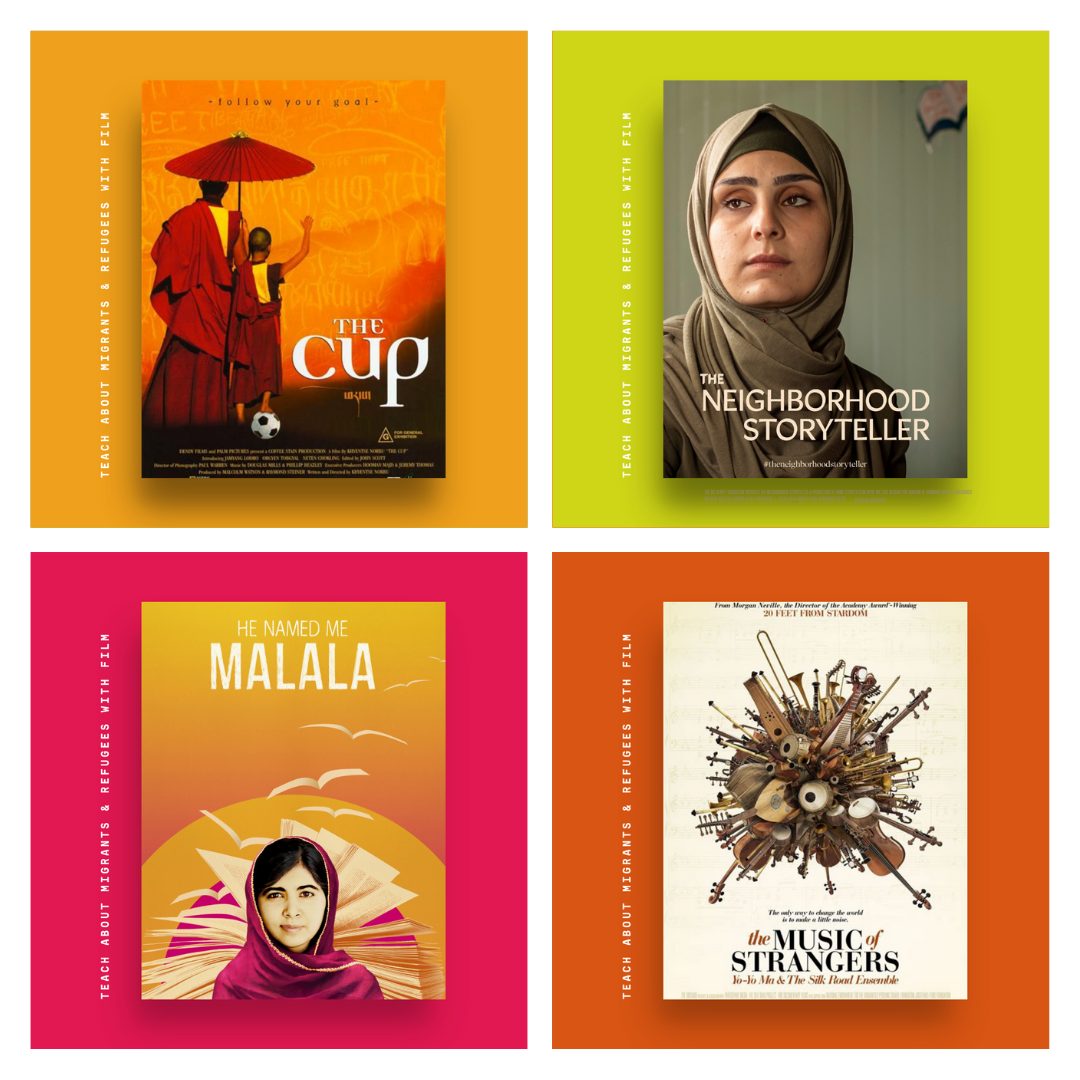
The Cup, a feature film about a young Tibetan Buddhist monk living as a refugee in India who develops a passion for the World Cup, includes a Visual Arts lesson on Mandala Art as Contemplative Practice. Pair it with our handout on Mandalas from The Story of God Curriculum Guide.
The Dhamma Brothers
The Dhamma Brothers, about a meditation program in an Alabama prison, includes an experiential lesson, Introduction to Meditation, which pairs well with the mediation section in The Story of God. The Dhamma Brothers curriculum guide also features lessons on the mental and physical effects of meditation.
Gabby Giffords Won’t Back Down
Our Learning Guide for Gabby Giffords Won’t Back Down, about gunshot survivor turned gun violence activist Gabby Giffords, includes a section on the impact of gun violence on Mental Health which features prompts for personal reflection and for discussion, as well as extension activities.
Happy
Award-winning documentary Happy explores The Psychology of Happiness. The Happy Curriculum Guide is a great tool to bolster social emotional learning (SEL).
Miles, Morale and Memories: Bob Hope and World War II
Miles, Morale and Memories: Bob Hope and World War II explores the healing and spirit-lifting power of laughter.
The Music of Strangers: Yo-Yo Ma and the Silk Road Ensemble
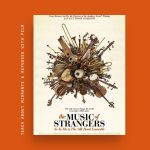
The Music of Strangers follows more than 50 artists as they explore the ways art can both preserve traditions and shape cultural evolution. Lesson 4 about The Ongoing Syrian Conflict and Humanitarian Crisis is a great way to teach about using art to respond to crisis. It includes a handout on Art as Self-Reflection. This lesson and handout pair well with Defiant Requiem.
The Neighborhood Storyteller
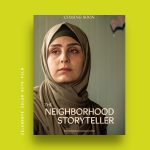
The Neighborhood Storyteller, about girls’ education activist Asmaa Rashed, includes “Work, Life Skills, and Visions for the Future,” which explores the intersection of identity, purpose, and happiness.
Youth v Gov
The Discussion Guide for Youth v Gov, about the young people suing the US government for the right to a safe climate, includes a great section for launching discussions about Climate Anxiety and coping strategies, as well as empowering sections on Climate Justice and Climate Activism.
Additional Resources
Learn more about mental wellness coping strategies with experiential lessons in our article for Religion Matters about Mindfulness, Meditation and Mandala Art.
When to Teach with These Materials
These films are great to teach with all year round. You may find them especially helpful for:
- Mental Wellness Month in January,
- World Teen Mental Wellness Day on March 2,
- Mental Health Awareness Month in May,
- Children’s Mental Health Awareness Week in May,
- PTSD Awareness Month in June,
- National PTSD Awareness Day on June 27,
- Black, Indigenous, and People of Color Mental Health Awareness Month in July,
- Mental Illness Awareness Week in October,
- World Mental Health Day on October 10.
Get Updates
Don’t miss out! Get notifications about launches of new Mental Wellness resources and other new reaching materials. Sign up for our newsletter.
Bring Refugee Stories To Your Classroom
The global plight of migrants, refugees and displaced persons is a growing and urgent contemporary issue that teachers increasingly seek to address in their classrooms. Our teaching materials are designed to support students to practice compassion and humility and make meaningful attempts to understand why refugees flee their homes, what their lives are like, and how everyday people can get involved to help. We warmly recommend the following film guides with lessons across the curriculum to provide a personal perspective on refugees’ experiences to engage and inspire your students.
Bring Refugee Stories To Your Classroom: Teach with Film
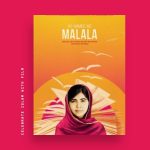
Bring Refugee Stories To Your Classroom: He Named Me Malala
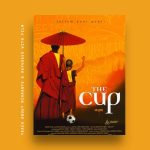
The Cup, a feature film about a young Tibetan Buddhist monk living as a refugee in India who develops a passion for the World Cup. Our The Cup Curriculum Guide includes a social studies / current events lesson about refugees. For grades 6-12 & adult/higher ed.
Related Resources
Get Updates
Don’t miss out! Get notifications about launches of new refugee story resources and other new reaching materials. Sign up for our newsletter.
Discussion Guides Make Screening Films Easy
Simplify your film screenings with film Discussion Guides from Journeys in Film! Our free Discussion Guides for award-winning films provide questions to encourage critical thinking, powerful discussion, and expanded understanding. Our Discussion Guides make hosting rousing discussions around film screenings to boost impact and engagement simple and easy.
Discussion Guide Frequently Asked Questions
Who are the Journeys in Film Discussion Guides for?
The Journeys in Film Discussion Guides are flexible by design to work in a wide range of situations: K12 classrooms and homeschooling, higher education, parenting / family film viewing, after school activities, library programs, community group and service club events, film clubs and doc clubs, and more.
How do educators use the Journeys in Film Discussion Guides?
Our film Discussion Guides are easy to use and require little to no advance preparation. They are great for sub days and end of term. They can also be incorporated into regular classroom use. They’re a flexible resource to keep tucked up your sleeve.
Can I use the Journeys in Film Discussion Guides on my own?
Yes! The questions in our Discussion Guides can serve as prompts for personal reflection, a viewer response journal, or for freewriting or creative writing.
Who makes the Journeys in Film Discussion Guides?
We work with teams of instructional designers, area experts and cultural consultants to create film-specific Discussion Guides with knowledge, care and attention. We do not use A.I. in the creation of our guides.
What kind of films does Journeys in Film create guides for?
We work with premier filmmakers to create Discussion Guides for award-winning social impact films. We develop Discussion Guides for films that don’t necessarily lend themselves to academic standards, but cover topics and themes that are valuable for classroom discussions and in other settings, such as after school clubs, community screenings, and university classes. Our film partners range from indie filmmakers to major studios like Disney.
Journeys in Film offers discussion guides for:
- Full length narrative films, like Hidden Figures;
- Short films, like Meshes of the Afternoon;
- Video series, like Finding Pride;
- Docu-Series, like The Invisible Shield;
- International films, like He Named Me Malala;
- Documentary films, like Greener Pastures and The Neighborhood Storyteller;
- Disney films, like Chevalier, Hidden Figures and Queen of Katwe;
- National Geographic series, like From The Ashes;
- Netflix films, like The Boy Who Harnessed the Wind and Youth v Gov;
- Steven Spielberg films, like Bridge of Spies;
- Oscar-winning films, like Navalny.
Why do some films have two guides?
Journeys in Film creates different kinds of guides to serve the needs of different kinds of learning environments.
- We also create Curriculum Guides, featuring teaching-ready lesson plans for classrooms, homeschooling and individual learners.
- For select films, we also create Learning Guides or Extended Discussion Guides, a type of film guide that digs even deeper into the material of a film and includes additional resources and extension activities.
- For short films, we sometimes create Mini Discussion Guides that make great classroom warm-ups or bell ringer activities!
Make sure you scroll all the way down each film page to see the full range of guides available.
Does Journeys in Film offer Discussion Guides in other languages?
Yes! We offer the following Discussion Guides in Spanish:
Can teachers and Book Clubs use the Journeys in Film Discussion Guides to discuss film and book tie-ins?
Yes! We recommend the following Discussion Guides for films that are based on books or have literary connections:
- Bridge of Spies and Strangers on a Bridge by James B. Donovan;
- Chevalier and African Europeans: An Untold History by Olivette Otele;
- Greener Pastures and Of Mice and Men by John Steinbeck;
- He Named Me Malala and Malala Yousafzai’s memoir I am Malala;
- Meshes of the Afternoon and The Yellow Wallpaper by Charlotte Perkins Gilman;
- Navalny and Alexei Navalny’s posthumous memoir Patriot;
- Queen of Katwe and The Queen of Katwe: One Girl’s Triumphant Path to Becoming a Chess Champion by Tim Crothers;
- The Boy Who Harnessed The Wind and The Boy Who Harnessed the Wind: Creating Currents of Electricity and Hope by William Kamkwamba and Bryan Mealer, also available in Young Reader and Picture Book editions;
- The Neighborhood Storyteller and Muzoon: A Syrian Refugee Speaks Out by Muzoon Almellehan and Wendy Pearlman.
How much do Journeys in Film Discussion Guides cost?
Like all of our resources, our Film Discussion Guides are free for everyone.
Journeys in Film Discussion Guides are free? Really?
Yes.
Where can I find the Journeys in Film Discussion Guides?
Check out our Discussion Guides along with all our film resources in the Journeys in Film Library.
Many of our Discussion Guides are also available through Share My Lesson.
What if I want Journeys in Film to make a Discussion Guide for my film?
Learn more about how Journeys in Film partners with filmmakers and then get in touch with us.
Does Journeys in Film offer Discussion Guides for Documentaries?
Yes! We offer discussion guides for award-winning documentaries from around the world like Chasing Time, He Named Me Malala, and The Story of God. See the full Journeys in Film Discussion Guide Index below or look them up using the filter options in our Resource Library.
Does Journeys in Film offer Discussion Guides for Narrative Films?
Yes. We offer Discussion Guides for narrative films like Bridge of Spies, Chevalier, Hidden Figures, Queen of Katwe, andThe Boy Who Harnessed The Wind. See the full Journeys in Film Discussion Guide Index below or look them up using the filter options in our Resource Library.
Does Journeys in Film offer Discussion Guides for Docu-series?
Yes. We offer Discussion Guides for docu-series like Genius, The Invisible Shield, The Story of God, and The Story of Us.
Does Journeys in Film offer Discussion Guides for films under one hour?
Yes. We offer Discussion Guides for several films under one hour, including Finding Pride, Meshes of the Afternoon, The Neighborhood Storyteller, and Unzipped. Check out the Discussion Guide Index by Running Time at the bottom of this article to find discussion guides for films based on length or look them up using the filter options in our Resource Library.
Does Journeys in Film offer Discussion Guides for elementary school use?
Yes, We offer Discussion Guides for films and series suitable for ages 7-12. See the Discussion Guide Index by Age Group below or look them up using the filter options in our Resource Library.
Does Journeys in Film offer Discussion Guides for middle school use?
Yes, We offer Discussion Guides for films and series suitable for ages 12-15. See the Discussion Guide Index by Age Group below or look them up using the filter options in our Resource Library.
Does Journeys in Film offer Discussion Guides for high school and higher education use?
Yes. Almost all of our films are appropriate for ages 14+. See the full Journeys in Film Discussion Guide Index below or look them up using the filter options in our Resource Library.
Journeys in Film Discussion Guide Index by Age Group
Ages 7 and up
Call Me Dancer — documentary, 1 hour 24 minutes.
Ages 8 and up
Jane — documentary, 1 hour 30 minutes.
Ages 10 and up
Hidden Figures — narrative film, 2 hours 7 minutes.
Queen of Katwe — narrative film, 2 hours 4 minutes.
The Neighborhood Storyteller — documentary, 49 minutes.
Ages 11 and up
Golden Age Karate — documentary short, five minutes.
Greener Pastures — documentary, 1 hour 25 minutes. *Also available in Spanish: Greener Pastures Guía de discusión.
Scrap — documentary, 1 hour 17 minutes.
The Boy Who Harnessed The Wind — narrative film, 1 hour 53 minutes.
The Fast Runner – narrative film, 18 minutes.
The Whitehouse Effect documentary, 1 hour 36 minutes.
Ages 12 and up
From The Ashes — documentary, 1 hour 22 minutes.
He Named Me Malala — documentary, 1 hour 28 minutes.
Searching for Amani — documentary, 55 minutes.
The Invisible Shield, — docu-series, 4 episodes, 54 minutes each.
The Power of Sports for Amputees — documentary, 46 minutes.
Tough Old Broads — documentary, 1 hour 29 minutes.
Ages 13 and up
A Promise to My Father — documentary, 55 minutes.
A Towering Task — documentary, 1 hour 53 minutes.
Breaking Enigma: A World War II Game Changer — documentary, 56 minutes.
Bridge of Spies — narrative film, 2 hours 22 minutes.
Chasing Ice — documentary, 35-minute and 75 minute versions.
Chasing Time — documentary, 24-minute and 40-minute versions
Chevalier — narrative film, 1 hour 37 minutes.
Dark Money — documentary, 1 hour 53 minutes.
Day of Days: June 6, 1944 — documentary, 54 minutes.
Finding Pride — short video collection, each video is 2-10 minutes.
Gabby Giffords Won’t Back Down — documentary, 1 hour 37 minutes. *Also available in Spanish: Gabby Giffords Won’t Back Down Guía de discusión.
Her War, Her Story: World War II — documentary, 58 minutes.
Majority Rules — documentary, 30 minute and 89 minute versions.
Miles, Morale & Memories: Bob Hope & World War II — documentary, 59 minutes.
Navalny — documentary, 1 hour 38 minutes..
The Story of God with Morgan Freeman — docuseries, six episodes, 42 minutes each.
The Tuskeegee Airmen: Return to Ramitelli — documentary, 56minutes.
Ages 14 and up
Meshes of the Afternoon — experimental short film, 14 minutes.
The Crisis Scientists – documentary, 6 minutes.
The Story of Us with Morgan Freeman — docuseries, six episodes, 60 minutes each.
Unzipped: An Autopsy of American Inequality — documentary, 51 minutes.
Youth v Gov — documentary, 1 hour, 50 minutes.
Ages 15 and up
Crip Camp — documentary, 1 hour 42 minutes.
Genius — docu-series, 10 episodes, 45-60 minutes each.
Adult / Mature Audiences
Safe Place — documentary short, 20 minutes, mature audiences.
Journeys in Film Discussion Guide Alphabetical Index by Running Time
Under 15 Minutes
Finding Pride — short video collection, each video is 2-10 minutes, ages 13+.
Golden Age Karate — documentary short, 5 minutes, ages 11+.
Meshes of the Afternoon — experimental short film, 14 minutes, ages 14+.
The Crisis Scientists – documentary short, 6 minutes, ages 14+.
15-29 Minutes
Chasing Time — documentary, 24-minute and 40-minute versions, ages 13+.
Safe Place — documentary short, 20 minutes, mature audiences.
The Fast Runner – narrative short, 18 minutes, ages 11+.
30-59 Minutes
A Promise to My Father— documentary, 55 minutes, ages 13+
Breaking Enigma: A World War II Game Changer — documentary, 56 minutes, ages 13+
Day of Days: June 6, 1944 — documentary, 54 minutes, ages 13+
Genius — docu-series, 10 episodes, 45-60 minutes each, ages 15+.
Chasing Ice — documentary, 35-minute and 75 minute versions.
Chasing Time — documentary, 24-minute and 40-minute versions.
Her War, Her Story: World War II — documentary, 58 minutes, ages 13+
Miles, Morale & Memories: Bob Hope & World War II — documentary, 59 minutes, ages 13+.
Majority Rules — documentary, 30-minute and 89-minute versions, ages 13+.
Searching for Amani — documentary, 55 minutes, ages 12+.
The Invisible Shield, — docu-series, 4 episodes, 54 minutes each, ages 12+.
The Neighborhood Storyteller — documentary, 49 minutes, ages 10+.
The Power of Sports for Amputees — documentary, 46 minutes, ages 12+.
The Story of God with Morgan Freeman — docuseries, six episodes, 42 minutes each, ages 13+.
The Tuskeegee Airmen: Return to Ramitelli — documentary, 56 minutes, ages 13+.
Unzipped: An Autopsy of American Inequality — documentary, 51 minutes, ages 14+.
1 Hour to 2 Hours
A Towering Task — documentary, 1 hour 53 minutes, ages 13+.
Call Me Dancer — documentary, 1 hour 24 minutes, ages 7+.
Chasing Ice — documentary, 35-minute and 75 minute versions, ages 13+.
Chevalier — feature film, 1 hour 47 minutes, ages 13+.
Crip Camp — documentary, 1 hour 42 minutes, ages 15+.
Dark Money — documentary, 1 hour 53 minutes, ages 13+.
From The Ashes — documentary, 1 hour 22 minutes, ages 12+.
Gabby Giffords Won’t Back Down — documentary, 1 hour 37 minutes, ages 13+.
Greener Pastures — documentary, 1 hour 25 minutes, ages 11+.
He Named Me Malala — documentary, 1 hour 28 minutes, ages 12+.
Jane — documentary, 1 hour 30 minutes, ages 8+.
Majority Rules — documentary, 30-minute and 89-minute versions, ages 13+.
Navalny — documentary, 1 hour 38 minutes., ages 13+.
Scrap — documentary, 1 hour 17 minutes, ages 11+.
The Boy Who Harnessed The Wind — feature film, 1 hour 53 minutes, ages 11+.
The Story of Us with Morgan Freeman — docuseries, six episodes, 60 minutes each, ages 14+.
The Whitehouse Effect — documentary, 1 hour 36 minutes, ages 11+.
Tough Old Broads — documentary, 1 hour 29 minutes, ages 12+.
Youth v Gov — documentary, 1 hour, 50 minutes, ages 14+.
Over 2 Hours
Bridge of Spies — feature film, 2 hours 22 minutes, ages 13+.
Hidden Figures — feature film, 2 hours 7 minutes, ages 10+.
Queen of Katwe — feature film, 2 hours 4 minutes, ages 10+.
Get Our Newest Guides
Don’t miss the launch of our new film Discussion Guides. To receive notifications about our new releases, sign up for the Journeys in Film newsletter.
Get Students Excited about Service Learning with Film
Looking for service learning lessons and community service projects for your classroom? Film is a powerful tool to excite students about service learning: it provides an intimate and engaging look at the work of contemporary activists, many of whom are young people themselves, who are making a difference in the world. Our films show students that positive change is possible and that they have the power to make an impact on the world around them in both large and small ways.
The National Youth Leadership Council (NYLC) defines service learning as an approach to teaching and learning in which students use academic and civic knowledge and skills to address genuine community needs. We’ve rounded up some of our best service activities in our recent film guides for your classroom use. Many of these lessons combine well together! We hope you’ll find them helpful for Volunteer Week (April), Volunteer Month in April, and all year round.
Several of these lessons and activities have an environmental theme that makes them great choices for Earth Month. Our curriculum guides include classroom-ready lessons for common core subjects across the curriculum: you can also collaborate on integrative learning centered on a film with teachers in other departments or coordinated across your whole school.
Service Learning with Film: New in 2026
The Scrap Discussion Guide suggests a range of ways to get involved in Circular Economies, Right to Repair activities, Upcycling and Urban Exploration. For grades 6-12, adult/higher ed.
The Power of Sports For Amputees Mini Discussion Guide explores expanding access and equity in adaptive sports. The extension activities include Community Mapping for Access, Policy Pathways Workshops, Shared Storytelling and Knowledge Exchange, and Adaptive Sports Conversations and Events. For grades 7-12, adult/higher ed. This is talso a powerful tool for HR departments, professional development training and community education.
The UnBroken Learning Guide features two community service lessons. Lesson 1: Everyday Courage — The Impact of Upstanders explores Self-Care Through Community and features an extension activity about Oral History Interviews. Lesson 3: Empathy as a Practice – Listening, Reflecting, Acting includes an extension activity about holding restorative listening circles. For grades 6-12.
Service Learning with Film: Foundations for Community Service
Golden Age Karate is a five-minute short film about community service! This Mini Discussion Guide / Bell Ringer explores the values that underpin helpful work, and how to move from the personal outward to the community level to do community service. For grades 6-12, adult/higher ed.
He Named Me Malala Lesson 5: Working for Change. This lesson equips students to critically evaluate people and organizations working for change; it’s a great lesson to pair with any of our service learning projects and with many social impact films. The lesson includes an extension activity where students design and host a community fair that allows nonprofit and education centers in their communities to explain and demonstrate their work. For grades 7-12.
Landfill Harmonic Lesson 3: Planting a Small Seed, Watching it Grow. This powerful 3-part lesson introduces students to the world of community service organizations, including what they are, how they operate, how to research them, and how to get involved and make a difference. The lesson also asks students how they want to change the world and supports them in taking action. This is another great foundational lesson to introduce students to community service work that pairs well with our other resources. For grades 7-12.
The Neighborhood Storyteller Discussion Guide: Grassroots Work, Life Skills, and Future Vision. This section introduces students to grassroots work and invites them to become changemakers in their communities. The broad focus of this section makes it a great foundation for service work that complements all of our service learning resources and also pairs well with our social impact films on every theme. For grades 9-12.
Service Learning with Film: Education & Gender Equity Service Projects
He Named Me Malala Discussion Guide: What Can You Do? This section includes 8 suggestions for service learning and community service activities to support Malala Yousafzai’s advocacy work for girls’ education. He Named Me Malala pairs well with The Neighborhood Storyteller. For grades 7-12.
Service Learning with Film: Environment & Climate Service Projects
Chasing Coral Lesson 3: Check Yourself preps students to connect with adults and synthesize information about consumption habits and the human-environment relationship. For grades 6-12.
The Chasing Ice Discussion Guides feature extension activities for how students can make a difference on climate change in their community and how to take action at their middle school, high school or university. For grades 6-12, college/adult ed.
Climate Emergency: Feedback Loops Lesson 5: Regreening. This upbeat, empowering lesson explores how students can be part of environmental change locally and globally. (It’s a great antidote to climate anxiety!) For grades 9-12.
River of Gold Lesson 11: Next Steps: What Can We Do? This lesson invites students to help save the Amazon Rainforest by creating awareness campaigns about the damage caused by illegal gold mining in the Amazon. There’s also an option to hold a fundraising campaign. This lesson is a great introduction to awareness campaigns in general and pairs well with other service projects. For grades 9-12. This guide is also available in Spanish and Portuguese.
The Boy Who Harnessed The Wind Lesson 6: Helping the Children of Malawi. This lesson introduces students to the problems facing children in Malawi and what relief organizations are doing to help. Students will explore and evaluate the best partnership for bringing about change for children, and, optionally, get involved with an organization they have researched. For grades 7-12. This lesson pairs well with the Landfill Harmonic lesson about researching service organizations.
The Boy Who Harnessed The Wind Discussion Guide: What about You? Getting Involved. This discussion guide section includes suggestions for 4 service learning activities. You may find some of the Foundations for Community Service Lessons at the top of this article helpful to support these activities. For grades 7-12.
The Crisis Scientists Discussion Guide features extension activities about creating a climate resilience project to make your school or community more climate-friendly and interviewing community members affected by climate change. For grades 9-12, adult/higher ed.
The Wild Curriculum Guide explores how to get involved in community environmental projects to save what you love. For grades 6-12, adult/higher ed.
Youth v Gov Lesson 4: Climate Close to Home. This lesson supports students through writing a letter to their elected officials about climate-related policies. For grades 7-12.
Youth v Gov Discussion Guide: What Can You Do? Community Action and Engagement. This section explores community service in the context of climate justice, and asks students to consider what actions they find inspirational and what they find effective. For grades 7-12.
Service Learning with Film: Social Service Learning Projects
Greener Pastures Discussion Guide Moving Beyond a Rock and a Hard Place: Community Action and Engagement. This section suggests ways to get involved and make a difference in social issues explored in the film: mental health, rural healthcare access, food scarcity, supporting farmers, and regenerative agriculture. For grades 8-12. This guide is also available in Spanish.
The Resisterhood Learning Guide features a Personal Civic Action Plan Worksheet to guide students through identifying social issues in their community that they are passionate about and choosing concrete ways to get involved to make a difference. This Learning guide is for grades 10-12 and adult/higher ed, but the worksheet may be adapted to work with other grades.
The Fast Runner Learning Guide lesson on Resistance and Action includes an extension activity based on group projects to improve students’ school or community with a focus on upstanders. For grades 6-12.
Unzipped: An Autopsy of American Inequality Learning Guide: Looking Ahead: Hope and Possibilities. This guide explores the driving question of how students can contribute to improving housing in their communities, on a statewide, national, or even international level. This section invites students to play a role in transforming the systemic barriers that create affordable housing, homelessness, and housing insecurity. The guide includes powerful information on housing solutions, blueprints for moving forward, and additional resources. For grades 9-12.
Would you like us to partner with you for educational engagement or professional development about the films mentioned in this article or other resources in our library? Contact us!
Related Resources
Are you making the case for including service learning in your school or organization? Check out this Edutopia article by Amy Meuers, CEO of the National Youth Leadership Council: Developing SEL Skills With Service Learning — Service learning provides a way for students to grow their social-emotional learning skills while helping their community.
Teach Genocide Education with Film
Genocide education is more urgent and timely than ever. We recommend the following films and teaching guides to support you in mindfully teaching Genocide education through film. These materials are appropriate for elementary school, middle school and high school; they can also work well for higher education, adult education, public screenings and community group settings.
Genocide Education: Instructional Foundations
Our webinar about Anti-Bias Education: Using Media to Foster Critical Thinking and Combat Antisemitism and Islamophobia sets you up for success with Holocaust Education and Genocide education. The session provides an overview of anti-bias teaching tools and as well as strategies for dealing with difficult classroom situations around these topics. This webinar is available free and on-demand through Share My Lesson. Participants can quality for one hour of PD-credit. Learn more about our Anti-Bias Education Webinar.
We also offer Facilitation Guidelines to create safe discussion spaces and lead productive explorations of difficult topics. These guidelines pair well with our film guides for classroom use. The guidelines apply to a wide range of settings and are free for everyone.
Our Francesco Curriculum Guide contains a powerful lesson on Genocides Past, Present and Future. Available in English and Spanish. For grades 11 and 12.
The Fast Runner is a narrative short film about a Polish girl coming of age at the start of the Holocaust. The educational resources of this film explore Dehumanization and Extremism, and Bystanders v. Upstanders. For grades 6 and up.
Genocide Education: First-Person Stories
To help your students understand the impact of the Holocaust as an example of a historic Genocide, consider using a film that focuses on an individual caught in the maelstrom of Nazism.
Big Sonia is about Holocaust survivor Sonia Warshawski, who was a Jewish teenager living in Poland when the German army invaded in the 1930s. She’s a woman who speaks to students and prison inmates about her story of unimaginable suffering — and she’s also a beacon of hope and resilience. For grades 7 and up.
Defiant Requiem: The Film is about a unique chapter in Holocaust history when prisoners used music and the arts to sustain their spirits and resist oppression at Terezín concentration camp. This film can be difficult to find but it makes a powerful teaching tool when it is available. For grades 6 and up.
Schindler’s List is a powerful Genocide Education tool in its own right. Our Schindler’s List curriculum guide also includes our newly updated lesson about Antisemitism in the contemporary world. The Antisemitism Today lesson works as a standalone teaching resource and can also pair with other Holocaust and Genocide Education resources. You can download Antisemitism Today its own from our Schindler’s List page and also from Share My Lesson. For grades 9 and up.
UnBroken presents the miraculous true story of the seven Weber siblings, ages 6-18, who evaded certain capture and death, and ultimately escaped Nazi Germany relying solely on their youthful bravado and the kindness of strangers, following their mother’s incarceration and murder at Auschwitz. The UnBroken Learning Guide includes three handouts: a primary source-rich handout focused on the Ringelblum Archive, an Empathy Map, and a Self-Care Wheel. For grades 6-12, adult/higher ed.
Genocide Education: Expand the Scope
Our And So It Begins Learning Guide explores Journalism, Disinformation and Social Media, a valuable resource for discussing contemporary genocides. Available in English and Spanish. For grades 8 and up.
Our Curriculum Guide for The Music of Strangers: Yo-Yo Ma & The Silk Road Project features an engaging lesson on Cultural Preservation that is relevant to Genocide discussions. For grades 7 and up.
Our Navalny learning guide includes a powerful lesson on Online Propaganda that pairs well with our Antisemitism Today lesson (above) for bringing Genocide Education into the present moment. For grades 9 and up.
Our step-by-step Holocaust Education Toolkit can help educators teach the Holocaust authentically, inspire empathy, and honor the lessons of history. Get this comprehensive guide on how to Teach Holocaust Education with Film at Share My Lesson: Teaching Holocaust Education with Film.
We hope these resources can support you in honoring those whose lives were lost to genocides, honoring survivors and their families, and committing to education, remembrance and prevention.
Teach Genocide Education with Film: Important Dates
Genocide education remains timely and urgent. Teachers, especially history and social studies teachers, may want to teach with holocaust education films on important dates in Genocide history:
- Jan. 27—International Holocaust Remembrance Day
- Feb. 1-7—World Interfaith Harmony Week
- March 1—Zero Discrimination Day
- April—Genocide Awareness Month (U.S.) and Genocide Remembrance, Condemnation and Prevention Month (Canada)
- April 23-24, 2025—Holocaust Remembrance Day or Yom Hashoah. (The date varies each year.)
- May 8—Time of Remembrance and Reconciliation for Those Who Lost Their Lives During the Second World War
- June 18—International Day for Countering Hate Speech
- Aug. 11-12—Anniversary of the 2017 white supremacist rally in Charlottesville, Va. (This event is referenced in the Journeys in Film Antisemitism Today lesson.)
- Aug. 22—The International Day Commemorating the Victims of Acts of Violence Based on Religion or Belief
- Aug. 23—European Day of Remembrance for Victims of Stalinism and Nazism
- Oct. 27—Anniversary of the Pittsburgh Tree of Life synagogue Shooting. (This event is referenced in the Journeys in Film Antisemitism Today lesson.)
- Nov. 9—International Day Against Fascism and Antisemitism
- Nov. 9-12—Kristallnacht
- Dec. 9—International Day of Commemoration and Dignity of the Victims of the Crime of Genocide and of the Prevention of this Crime
- Dec. 10—Anniversary of the 2019 Jersey City, N.J., shooting at a kosher grocery store (This event is referenced in the Journeys in Film Antisemitism Today lesson.)
Get Updates
Don’t miss out! Get notifications about launches of new Holocaust Education resources and other new materials. Sign up for our newsletter.
Teach Math with Film for Math and Stats Month
Did you know you can teach math with film? For Mathematics and Statistics Month in April, we’re highlighting some of our favorite math teaching tools. Our free film teaching guides feature classroom-ready lesson plans across the curriculum suitable for grade 4 all the way to grade 12 — including math lessons!
Our most popular math lesson is part of our Hidden Figures Curriculum Guide, about The Math of Space Travel: Orbits and Conic Sections. For grades 9-12.
Children of Heaven features two math lessons: Lesson 8: Keeping Secrets and Lesson 9: Iran: The Land of Earthquakes. For grades 6-11.
Like Stars on Earth Lesson 4 explores the math of Determining Your Grade: Calculating Percents. For grades 5-9.
Please Vote for Me Lesson 4 introduces students to Integer Calculations with Chinese Number Rods. For grades 5-9.
The Cup Lesson 9 looks at the math of The Value of Money. For grades 7-12.
The Way Home Lesson 9 teaches students about Using Graphs. For grades 8-12.
Whale Rider Lesson 9 shows students how to Count the Uncountable with Fermi problems, using examples from the film. For grades 7-10.
Get your free math lesson plans from our library and liven up your math classes today!
Anti-Bias Education: Resources to Combat Islamophobia
The need for Anti-Bias Education Resources to Combat Islamophia is timely and urgent. We recommend the following films and teaching guides to support you in countering Islamophobia in your learning environments. These materials are appropriate for elementary school, middle school and high school; they can also work well for higher education, adult education, HR trainings and professional development, public screenings and community group settings.
Anti-Bias Education Resources to Combat Islamophobia: Instructional Foundations
Anti-Bias Education Webinar
Our teacher training webinar about Anti-Bias Education: Using Media to Foster Critical Thinking and Combat Antisemitism and Islamophobia provides an overview of anti-bias teaching tools and strategies for dealing with difficult classroom situations around these topics. This webinar is available free and on-demand through Share My Lesson. Participants can quality for one hour of PD credit.
▶ Learn more about our Anti-Bias Education Webinar.
Facilitation Guidelines for Group Discussions
We also offer Facilitation Guidelines to create safe discussion spaces and lead productive explorations of difficult topics. The guidelines apply to a wide range of settings beyond the classroom and are useful for teaching Anti-Bias Education.
▶ Learn more about teaching with the Group Discussion Facilitation Guidelines.
Download Facilitation Guidelines
Preview Facilitation Guidelines
Anti-Bias Education Resources to Combat Islamophobia: Introducing Islam
Equip your students with religious literacy and cultural competence skills by introducing them to Islam with film.
Introduce Islam with Film: The Story of God
National Geographic’s docuseries The Story of God with Morgan Freeman sheds a brilliant light on the remarkable and unmistakable similarities among different faiths.
The section on Islam in our free The Story of God Curriculum Guide includes an introduction to Muslim beliefs and practices, highlights arts of the Islamic world, explores Islamic empires, and examines Islam’s rich contributions to science.
Lesson Grades: 9, 10, 11, 12, College, Adult Learning
Subjects: Language Arts, Religious Literacy, Religious Studies, Social Studies, World History, World Religions
▶ Learn more about teaching with The Story of God.
Download The Story of God Discussion Guide
Preview The Story of God Discussion Guide
Anti-Bias Education Resources to Combat Islamophobia: Engaging Muslim Stories
To help your students break down implicit and explicit biases, consider teaching with films that present compelling Muslim characters.
Combating Islamophobia with Film: Children of Heaven
Children of Heaven follows an Iranian brother and sister and their adventures over a lost pair of shoes. The film showcases both modern and tradition Tehran and portrays a loving family trying to do their best.
Our free Children of Heaven Curriculum Guide includes an introduction to the Islamic Republic of Iran.
Lesson Grades: 6, 7, 8, 9
Subjects: Geography, Social Studies, World History
▶ Learn more about teaching with Children of Heaven .
Download Children of Heaven Curriculum Guide
Children of Heaven Curriculum Guides
Related Resource: If you are teaching about Iran, we also recommend The Music of Strangers: Yo-Yo Ma and the Silkroad Ensemble.
Combating Islamophobia with Film: Resisterhood
Resisterhood profiles six diverse Americans who are all civically engaged in different, inspiring ways. One of the subjects is a first-time political candidates: Muslim-American Mimi Hassanein, a first-generation immigrant from Egypt. Her story sheds light on what it’s like to be Muslim in contemporary America and also speaks broadly to immigrant experiences in the USA.
Lesson Grades: 10, 11, 12, College, Adult Learning
Subjects: Current Events, Civics, Government, Political Science, Social Studies, Women’s Studies
▶ Learn more about teaching with Resisterhood.
Download Resisterhood Learning Guide
Preview Resisterhood Learning Guide
Combating Islamophobia with Film: The Neighborhood Storyteller
In The Neigbhorhood Storyteller, a young Syrian mother in a refugee camp in Jordan embarks on a read-aloud project to raise a new generation of successful young women.
Our The Neighborhood Storyteller Discussion Guide features connections to Muzoon: A Syrian Refugee Speaks Out by Muzoon Almellehan with Wendy Pearlman, for educators interested in doing a film-book pairing for grades 5-12.
Lesson Grades: 5, 6, 7, 8, 9, 10, 11, 12, College
Subjects: Current Events, English Language Arts, Geography, History, Social Studies, Women’s Studies, World History
▶ Learn more about teaching with The Neighborhood Storyteller.
Download TNS Learning Guide
Preview TNS Learning Guide
Anti-Bias Education Resources to Combat Islamophobia: Expand the Scope
Navigating Online Hate Speech
Our resources for teaching about Disinformation, Propaganda and Social Media pair well with Anti-Bias Education lesson for bringing discussions on the spread of Islamophbia into the present. For grades 9 and up.
▶ Learn more about teaching with our Disinformation, Propaganda and Social Media resources.
Broadening Perspectives
Our Windows and Mirrors media literacy activity encourages learners to engage with a balanced variety of text and media perspectives. The activity also builds belonging and class community by expanding students’ understanding of people in their classroom and the broader world. For all ages.
▶ Learn more about teaching with Windows and Mirrors.
Download Windows and Mirrors Handout Download Media Audit Log
Preview Windows and Mirrors Handout Preview Media Audit Log
Anti-Bias Education Resources to Combat Islamophobia: Journeys Resources
Teach Anti-Bias Education with Film
Teach about Iran with Film.
Teach about Syria with Film.
Teach about World Religions with Film
Anti-Bias Education Resources to Combat Islamophobia: Related Resources
Challenging Islamophobia from the Zinn Education Project
Countering Islam from Learning for Justice
Ten Documentary Films That Celebrate Women of Faith (including multiple films about Muslim women) from Religion Matters
Anti-Bias Education Resources to Combat Islamophobia: Important Dates
Teachers may want to teach with Anti-Bias Education lessons about combating Islamophobia on these important dates:
- January 29 – National Day of Remembrance of the Quebec City Mosque Attack and Action Against Islamophobia (Canada)
- Feb. 1-7 – World Interfaith Harmony Week
- March 1- Zero Discrimination Day
- March 15 International Day to Combat Islamophobia
- April – Genocide Awareness Month (U.S.) and Genocide Remembrance, Condemnation and Prevention Month (Canada)
- June 18 – International Day for Countering Hate Speech
- Aug. 22- The International Day Commemorating the Victims of Acts of Violence Based on Religion or Belief
- Nov. 14 – International Day for Tolerance
- Dec. 9 – International Day of Commemoration and Dignity of the Victims of the Crime of Genocide and of the Prevention of this Crime
Get Updates
Don’t miss out! Get notifications about launches of new Anti-Bias Education resources and other new reaching materials. Sign up for our newsletter.
Teach about Iran with Film
Film is a powerful way to teach about global peoples and cultures. As part of our global education collection, we are pleased to offer two Journeys in Film curriculum guides to help you teach about Iran with film, plus a curated collection of films by Iranian and Iranian-American filmmakers.
Teach about Iran with Film: Children of Heaven
Children of Heaven is a valuable resource for introducing students to The Islamic Republic of Iran. This contemporary Iranian film, shot in and around Tehran, follows two siblings who must work together to find a creative solution to deal with a missing pair of shoes. It’s a heartwarming film about families, compassion, moral responsibilities and issues of limited resources. Our Children of Heaven curriculum guide features a social studies lesson about the geography and culture of Iran for grades 6-9. The curriculum guide also features a country profile of Iran.
Learn more about teaching with Children of Heaven.
Teach about Iran with Film: The Music of Strangers: Yo-Yo Ma and the Silk Road Ensemble
The Music of Strangers: Yo-Yo Ma and the Silk Road Ensemble is a powerful global education tool. This stunning documentary follows musicians, artists and storytellers from around the world as they explore the ways art can both preserve traditions and shape cultural evolution. The film includes an exploration of the life and work of Iranian musician Kayhan Kalhor. After the Iranian Revolution, Kalhor moved to Europe and Canada, and eventually immigrated to the United States. His work reflects both the folk melodies of Kurdish Iran and classical Iranian music. Our curriculum guide for The Music of Strangers features a lesson on the pivotal historic event of the Iranian Revolution, and its lasting effects on Iranian culture, for grades 7-12.
Learn more about teaching with The Music of Strangers.
Teach about Iran with Short Films: Gaze and The Young Old Crow
Recently, our Executive Director Jen Fischer curated a selection of short films for Culture Fix, including noteworthy short films from Iran. Culture Fix is a global collaborative network of cultural producers, creatives, activists, and entrepreneurs who use arts and culture to create social change.
Gaze is a fourteen minute short narrative film about an Iranian woman who witnesses an event on her way home from work and must decide what response to take. The film builds tension and offers opportunities to discuss difficult decisions and the reality of being an upstander versus and bystander. Gaze is available on Short of the Week and YouTube.
The Old Young Crow is a 12 minute short film about an Iranian boy who befriends an elderly Japanese woman in Tokyo. He reflects on that encounter through his old sketchbook in a combination of animation and live-action techniques. (Content note for educators: the film’s subject matter includes loss, suicide, death, and the afterlife, but no violence or death is shown.)
Spotlight on Iranian-American Filmmaker and Oscar-winner Rayka Zehtabchi
Shn(y)oof is an experimental short film co-directed by Iranian-American woman filmmaker Rayka Zehtabchi. We recommend watching Shn(y)oof and then reading the details about the film because the key to Shn(y)oof is behind the scenes. This film can inspire interesting learner discussions and activities around language and imagination. Learners could make up some of their own words or it may inspire bilingual and/or multilingual poetry writing. Shn(y)oof is available to watch from Short of the Week, which explains the filmmaker’s approach and goals for the film; it is also available but without the additional information on Vimeo.
Rayka Zehtabchi was the first Iranian woman to win an Oscar (for Period. End of Sentence). She was interviewed by Alyssa Shapiro for Youth to the People following her Oscar win. Check out the interview to learn more about this award-winning Iranian-American filmmaker.
Shn(y)oof is an excellent film for a Bell Ringer or “Watch and Write” opportunity. Here are our writing prompts for this fun short film.
- Create a list of 3-5 words (or more!) that could be part of your own made-up language. Give your language a name. Designate parts of speech for the words, if you can.
- Write a poem that marks a date that is special to you (like the anniversary in the film). In the poem, use words that others would recognize as well as some made up words that might be understandable through context. If you are bilingual (or trilingual or multilingual), use words from the various languages you know all together in one poem.
- This film is presented as a documentary, but is actually a scripted film (narrative/fiction) that is designated as experimental in the film world. Make a list of things in the film that felt “real.” Then make a list of things in the film that seemed perhaps “not real.” Reflect on why the filmmakers chose to make this film in this way, as if it were a documentary, when it was actually fiction.
- 3. Write your own logline for this film. (A logline is a short sentence or two that gives the audience an idea of what the film is about.)
You can find more short film recommendations with “Watch and Write” activities here.
Spotlight on Iranian-American Filmmaker Samuel-Ali Mirpoorian
Sam Mirpoorian is an Emmy® Award- and Television Academy Honors Award-winning filmmaker exploring societal themes at the intersection of time, isolation, health, science, and introspection. Sam was named a New Wave Filmmaker by Film Independent in 2025, a PBS Wyncote Fellow in 2023 and is a recipient of the Kodak Motion Picture Film Bronze Award for Excellence in Filmmaking. His work has been supported by Far Star Action Fund, Doc Society, Catapult Film Fund, Exposure Labs, ITVS, The Redford Center, and The Points North Institute. We are proud to offer teaching resources for two of Sam’s films.
Greener Pastures provides an intimate window into the lives of four multigenerational farming families as they navigate the stressors that have contributed to farming having one of the highest rates of suicide of any U.S. occupation. The Greener Pastures Discussion Guide for grades 6-12 and adult/higher ed is available in English and Spanish.
Sam’s short documentary film Safe Place chronicles the final hours of a a Southern Indiana man who endures a fatal night of torture while in custody after being arrested for a routine traffic stop. Content note for educators: this film contains difficult subject matter and is recommended for mature audiences. The Safe Place Discussion Guide is created for adult/higher ed use.
We hope that educators will find these resources helpful for putting Iranian culture, history and current events in context for your classroom discussions and presenting
Related Resources
Combat Islamophobia with Film
Teach Anti-Bias Education with Film
Get Updates
Don’t miss out! Get notifications about launches of new Anti-Bias Education resources and other new reaching materials. Sign up for our newsletter.
Updated to add additional resources April 2026.
Teach with Oscar Movies
Teach with Oscar movies to boost student engagement across the curriculum! We are proud to offer free, classroom-ready lesson plans and discussion guides to make it easy to teach with Oscar winners and Oscar-nominated films.
Bridge of Spies
Bridge of Spies received six nominations. They were for Best Supporting Actor (Mark Rylance), Best Picture, Best Original Screenplay, Best Original Score, Best Production Design and Best Sound Mixing. Our Bridge of Spies Discussion Guide explores the Cold War and implications for today. For grades 11-12, adult/higher ed.
Crip Camp
Crip Camp was nominated for Best Documentary Feature Film in 2021. Our Crip Camp Discussion Guide explores the history-making 504 Sit-In. We also offer a Crip Camp Curriculum Guide, featuring a powerful anti-bias education lesson on language and ableism. For grades 9-12, adult/higher ed.
Children of Heaven
Children of Heaven received a Best Foreign Language Film nomination in 1999. It is a relatable, touching film about siblings in Iran. Our Children of Heaven Curriculum Guide offers opportunities to teach about Iran as well as the science of earthquakes and more. For grades 6-12.
Hidden Figures
Hidden Figures received three nominations in 2017. They were for Best Picture, Best Adapted Screenplay and Best Supporting Actress (Octavia Spencer). Our Hidden Figures Curriculum Guide is our most downloaded film guide. We also offer a Hidden Figures Discussion Guide. For grades 4-12.
Navalny
Navalny won the 2023 Oscar for Best Documentary. This political thriller 2023 Oscar Winner for Best Documentary Feature follows follows the late Russian opposition leader and democracy activist Alexei Navalny in his quest to identify the men who poisoned him in August 2020. We offer two resources for this acclaimed film: a Navalny Discussion Guide and a Navalny Learning Guide. For grades 9-12, adult/higher ed.
Schindler’s List
Schindler’s List, one of the first films we created resources for, dominated the Oscars in 1994. The film received 7 wins and a total of 11 nominations.
Wins include: Best Picture, Best Director (Steven Spielberg), Best Adapted Screenplay, Best Cinematography, Best Art Direction (Set), Best Film Editing, Best Music (Original Score).
Nominations include: Best Actor (Liam Neeson), Best Supporting Actor (Ralph Fiennes), Best Costume Design, Best Sound, Best Makeup.
Our Schindler’s List Curriculum Guide features 8 lessons. Our updated Antisemitism lesson is now available, in our special edition Schindler’s List 30th anniversary guide or as a standalone lesson (from the same page). It pairs well with our Navalny Learning Guide section on propaganda. For grades 9-12, adult/higher ed.
Summer of Soul
Summer of Soul won the 2022 Oscar for Best Documentary Feature Film. Our Summer of Soul Curriculum Guide introduces students to iconic Black musicians of the 1960s and also explores US History, Music, Current Events, Economics, Film Literacy, Language Arts, Sociology and Speech. For grades 7-12, adult/higher ed.
The Post
The Post received two nominations: Best Actress (Meryl Streep) and Best Picture in 2018. Our 8-lesson curriculum guide for The Post features a lesson on fake news. For grades 9-12, adult/higher ed.
Whale Rider
The beautiful New Zealand film Whale Rider garnered Māori actress Keisha Castle Hughes a Best Actress nomination in 2004. Our Whale Rider Curriculum Guide offers resources on exploring Maori culture as well as math, science, media literacy and more. For grades 6-10.
Music in Our Schools Month: Teach with Film
March is Music in Our Schools Month. Celebrate with these beautiful films plus our free lesson plans to boost student engagement across the curriculum including Music Education, Language Arts, Social Studies, History, Environmental Science and more! For grades 2 and up.
New for Music in Our Schools Month 2026: Call Me Dancer
Call Me Dancer follows a 21-year-old street dancer from India who is torn between his artistic dreams and his struggling parents’ expectations – until he meets a feisty 75-year-old ballet master. Call Me Dancer teaching resources include:
- Learning Guide for Grades 2-6
- Learning Guide for Grades 6-12
- Mini Discussion Guide / Bell Ringer (3 -pages, printer-friendly) (Grades 4-12)
- Dance-Focused Slideshow, for Physical Education classes and related learning spaces. (Grades 4-12).
These are valuable resources for global education, social emotional learning, building vocabulary and critical thinking skills, building classroom community, bolstering positive habits and more. They can be used in Career Studies, Economics, English Language Arts, Geography, International Relations, Music, Performing Arts, Physical Education, Social Emotional Learning, and Visual Arts classes.
Six More Great Films to Teach for Music in Our Schools Month
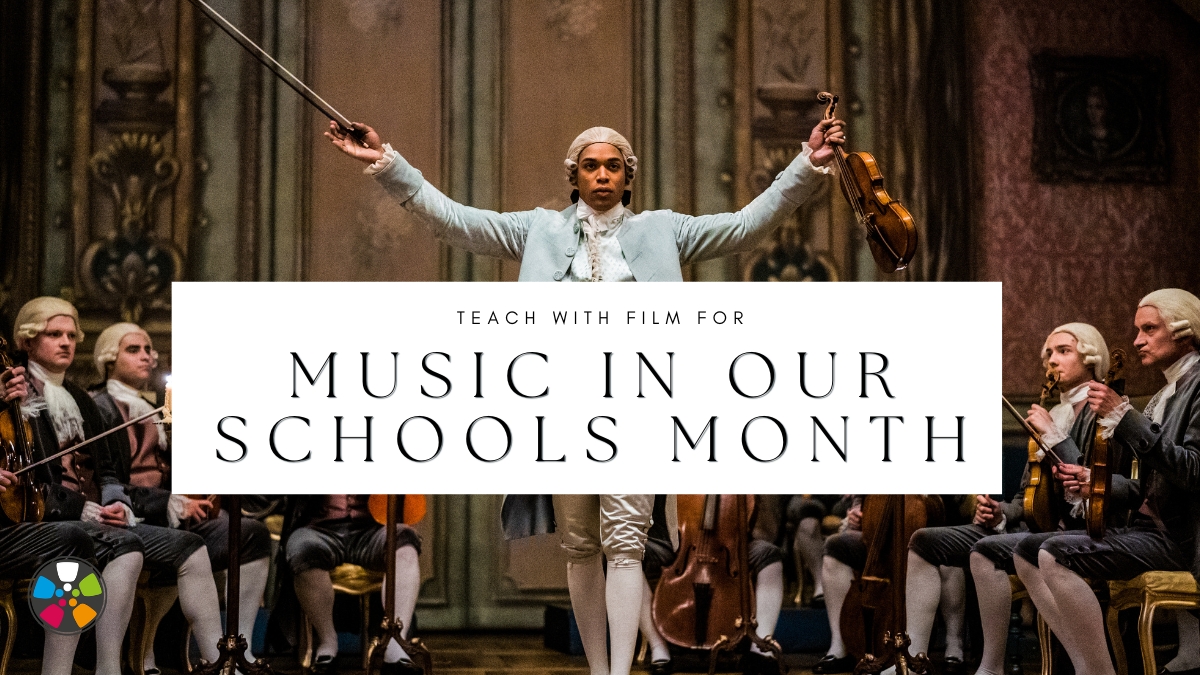
Disney’s hit film Chevalier was inspired by the true story of Joseph Bologne, Chevalier de Saint-Georges, the historic Black violinist, composer and fencer at the court of Marie Antoinette. The Chevalier Discussion Guide explores Joseph Bologne’s legacy, as well as the impact of music and the arts on social and cultural revolutions. For high school.
Powerful Holocaust Education film Defiant Requiem chronicles how prisoners at Theresienstadt (Terezin) concentration camp used music and the arts as a tool of resilience and resistance. The Defiant Requiem Curriculum Guide includes lessons on Verdi and his requiem, and also on the psychology of art and resilience. For grades 6 and up.
Landfill Harmonic is an inspiring documentary about the Recycled Orchestra of Cateura, the Paraguayan classical music group that plays instruments made entirely out of upcycled garbage. The Landfill Harmonic Curriculum Guide includes a lesson all about this amazing youth orchestra. For grades 5-10.
My Music with Rhiannon Giddens Season 2 presents a series of musical performances and conversations with multicultural musicians. We offer Learning Guides for the episodes that feature Chinese pipa master Wu Man, Celtic harpist Maeve Gilchrist, Black American violinist and improvisational conductor Mazz Swift, and Native American vocalist and lap steel player Pura Fé. We also offer handouts for two music-related extension activities. The Music Listening Handout gets students focused on the component parts of what they’re hearing and they work together. In the Song Analysis Handout, students explore the lyrics, cultural context, and meaning behind songs. In addition, we offer resources to complement this series to teach about the building of the American Transcontinental Railroad — and the diverse communities it affected. Explore the My Music with Rhiannon Giddens Season 2 teaching resources now. For grades 6-12.
Summer of Soul documents the extraordinary 1969 Harlem Cultural Festival, in an epic celebration of Black history, culture and fashion. The Summer of Soul Curriculum Guide introduces students to iconic Black musicians of the 1960s. It also features an activity where students plan their own music festival. For grades 7-12.
The Music of Strangers: Yo-Yo Ma and the Silk Road Ensemble presents a vivid portrait of a bold musical experiment and a global search for the ties that bind that brings together musicians and artists from around the world. The Music of Strangers Curriculum Guide features a lesson on ancient instruments and a printable PDF about traditional instruments around the world. For grades 6-12.
Plan Ahead
In addition to Music in Our Schools Month, these films can also be great choices to teach with for Classical Music Month in September, International Music Day on October 1, and Violin Day on December 13.
Get Updates
Teach about Islam with Film
Teach about Islam with film all year round with these global education films that center Muslim stories plus our free teaching guides. For grades 5-12 plus adult/higher ed.
Resources to Teach about Islam with Film
Teach about Islam with Film: Children of Heaven
Children of Heaven follows an Iranian brother and sister and their adventures over a lost pair of shoes. The film showcases both modern and tradition Tehran and portrays a loving family trying to do their best.
Our free Children of Heaven Curriculum Guide includes an introduction to the Islamic Republic of Iran.
Lesson Grades: 6, 7, 8, 9
Subjects: Geography, Social Studies, World History
Get the Children of Heaven Curriculum Guide.
Related Resource: If you are teaching about Iran, we also recommend The Music of Strangers: Yo-Yo Ma and the Silkroad Ensemble.
Teach about Islam with Film: He Named Me Malala
He Named Me Malala follows events leading up to the Taliban’ attack on Pakistani schoolgirl Malala Yousafzai for speaking out on girls’ education, followed by the aftermath, including her speech to the United Nations. It tells the story of an inspiring young Muslim woman who becomes a public figure and role model.
Our free He Named Me Malala Curriculum Guide includes a lesson about examining Malala’s iconic Nobel Peace Prize address.
Lesson Grades: 7, 8, 9, 10, 11, 12, College, Adult Learning
Subjects: English Language Arts, Language Arts, Speech, Women’s Studies
Get the He Named Me Malala Curriculum Guide.
Teach about Islam with Film: Resisterhood
Resisterhood profiles six diverse Americans who are all civically engaged in different, inspiring ways. One of the subjects is a first-time political candidates: Muslim-American Mimi Hassanein, a first-generation immigrant from Egypt. Her story speaks broadly to the immigrant experience in the USA and also what it’s like to be Muslim in contemporary America.
Lesson Grades: 10, 11, 12, College, Adult Learning
Subjects: Current Events, Civics, Government, Political Science, Social Studies, Women’s Studies
Get the Resisterhood Discussion Guide.
Teach about Islam with Film: The Neighborhood Storyteller
In The Neigbhorhood Storyteller, a young Syrian mother in a refugee camp in Jordan embarks on a read-aloud project to raise a new generation of successful young women.
Our The Neighborhood Storyteller Discussion Guide features connections to Muzoon: A Syrian Refugee Speaks Out by Muzoon Almellehan with Wendy Pearlman, for educators interested in doing a film-book pairing for grades 5-12.
Lesson Grades: 5, 6, 7, 8, 9, 10, 11, 12, College
Subjects: Current Events, English Language Arts, Geography, History, Social Studies, Women’s Studies, World History
Get the The Neighborhood Storyteller Discussion Guide.
Teach about Islam with Film: Wadjda
In Wadjda, a young Saudi girl signs up for her school’s Quran recitation competition as a way to raise the funds she needs in order to buy the bicycle of her dreams.
Our free Wadjda Curriculum Guide features a lesson with an introduction to the Quran.
Lesson Grades: 9, 10, 11, 12
Subjects: Language Arts, Religious Literacy, Religious Studies, Social Studies, World History, World Religions
Teach about Islam with Film: The Story of God
National Geographic’s docuseries The Story of God with Morgan Freeman sheds a brilliant light on the remarkable and unmistakable similarities among different faiths.
The section on Islam in our free The Story of God Curriculum Guide includes an introduction to Muslim beliefs and practices, highlights arts of the Islamic world, explores Islamic empires, and examines Islam’s rich contributions to science.
Lesson Grades: 9, 10, 11, 12, College, Adult Learning
Subjects: Language Arts, Religious Literacy, Religious Studies, Social Studies, World History, World Religions
Get The Story of God Curriculum Guide.
Related Resources
Professional Development: Learn more about teaching Anti-Bias Education with films like The Neighborhood Storyteller for PD credit in our free, on-demand webinar: Using Media to Foster Critical Thinking and Combat Antisemitism and Islamophobia.
For more Global Education Films from around the world that introduce students to global cultures and customs, we also recommend: Children of Heaven (Iran), Like Stars on Earth (India), Please Vote for Me (China), The Cup (Tibet), The Way Home (South Korea), and Whale Rider (Aotearoa / New Zealand).
Teaching about Iran? Check out our films about Iran.
Teaching about Media Literacy and Representation? Our Windows and Mirrors Media Literacy Activity gives students a way to consider how the perspectives of underrepresented and marginalized people are included in their media diets.
Teaching about Religious Literacy and Religious Studies? Get more resources for teaching about World Religions.
Updates
This article was updated in February 2026 (to add related resources). Don’t miss out on new updates! To get notifications about new film guides and collections, sign up for our newsletter.
Inspire Your Heart With Art
Inspire your heart with art all year round! We’re highlighting our favorite film-based art lessons for elementary school, middle school and high school.
Children of Heaven: Learn about Persian Carpets and weave your own! Grades 5-10.
Like Stars on Earth: Explore Indian Block Printed Textiles. Grades 5-8.
Please Vote For Me: Make your own Chinese Papercuts Folk Art. Grades 5-8.
Rebel Hearts: Explore the powerful protest art of Corita Kent and make your own calligraphic art. Grades 7-12.
The Cup: Learn about Tibetan Mandala Art and make your own! Grades 5-8.
The Love Bugs: Learn how to make a bug kite! Grades 2-4.
The Way Home: Discover Korean Fighter Shield Kites. Grades 5-8.
Walden, a game: Learn about the Hudson River Painters and make a nature-inspired art project. Grades 9-12.
We hope these lessons will inspire your students hearts with art while teaching empathy, compassion, and global understanding.
Journeys in Film Webinars Make Professional Development Easy
Deepen your skills for teaching with film with Journeys in Film Professional Development Webinars. These teacher training sessions are available free, online and on-demand. Earn one hour of PD credit upon successful completion of each webinar. Participants will gain tools to boost student engagement and teach critical thinking across the curriculum.
Journeys in Film Webinars
Anti-Bias Education
Learn about teaching critical thinking with film to combat Antisemitism and Islamophobia.
This webinar highlights key aspects of anti-bias education and shares film-related resources specific to Antisemitism and Islamophobia. Featured resources include our new lesson about Antisemitism within the context of the rise of white supremacy. The webinar also explores films and film-related resources that offer students a broader understanding of Islam and the Muslim world.
Learn more about this webinar: Anti-Bias Education. For Grades 6-12.
Climate Emergency: Feedback Loops
Learn how to inspire students with film to build a sustainable future, with a specific focus on Climate Emergency: Feedback Loops. This invigorating panel discussion with climate educators and scientists demonstrates the power of using this series of five short films to engage and inspire students to build a sustainable future through increased understanding of forests, permafrost, the atmosphere, albedo, and regreening.
Learn more about this webinar: Using Film to Inspire and Educate. For Grades 6-12.
Gabby Giffords Won’t Back Down
Learn how to use the power of film and biographical stories to increase student learning and engagement around sensitive subjects, with a specific focus on award-winning documentary Gabby Giffords Won’t Back Down. This webinar offers tangible resources and tools for tackling challenging topics such as gun violence in the classroom. It also explores the power of this resource to teach a wide array of important themes, including civics, community service learning, mental health, media responsibility, and career pathways.
Learn more about this webinar: Student Engagement Through The Power of Film. For Grades 5-12.
Hidden Figures
Learn how Hidden Figures can excite & engage your grade 3-12 students about 9 different subjects. This webinar uses Hidden Figures as an example to guide educators to resource techniques in teaching with film while addressing Common Core objectives. Grounded in the inspiring true story of the Black women mathematicians who worked in the NASA space program, participants explore our Hidden Figures lessons on the Civil Rights Movement, the Cold War, and the Space Race as tools to address gender equity in STEM fields when teaching across subjects for their own classroom.
Learn more about this webinar: Using Film to Teach Across the Curriculum. For Grades 3-12.
Just Mercy
Learn about exploring Inequity in Criminal Justice with Just Mercy. This narrative film is based on the true story of Equal Justice Initiative founder Bryan Stevenson and his crusade as a young lawyer to exonerate Walter McMillian, a Black man unjustly convicted for murder. The webinar explores strategies for culturally responsive teaching to support working with students on difficult and crucially important topics like inequities in criminal justice.
Learn more about this webinar: Teaching with Just Mercy. For Grades 9-12.
Summer of Soul
Teach Black History all year round! Learn about celebrating Black History through music & film with Oscar-winner Summer of Soul. Directed by Ahmir Questlove Thompson, Summer of Soul is a powerful, transporting film about the Harlem Cultural Festival of 1969 featuring performances by Nina Simone, Sly and the Family Stone, Gladys Knight & the Pips, Mahalia Jackson, B.B. King, The 5th Dimension and more. Bring Black Joy and Black Excellence to your classroom to engage students in celebrating Black History through music and film.
Learn more about this webinar: Celebrating Black History Through Music and Film. For Grades 6-12.
The Boy Who Harnessed The Wind
Learn about teaching STEAM classes with film, with a special focus on The Boy Who Harnessed The Wind. This Netflix film is based on the true story of William Kamkwamba, a brilliant teenager whose creativity, persistence and courage provided a solution to devastating drought for his family and eventually for his village and many others in his country of Malawi and beyond. The webinar presents an overview of the interdisciplinary resources available for the film to support science, physics, language arts and social studies teachers in exploring the geographical and environmental context of Malawi, the history and engineering of wind power and the factors that influenced William’s journey: religion, politics, the environment, and education. William Kamkwamba himself joins the presentation for the Q&A.
Learn more about this webinar: Engineering and Activism. For Grades 3-12.
Custom Professional Development
Our Professional Development goes beyond Journeys in Film webinars! We can also provide professional development for your choice of films from our library to amplify your use of film in the classroom. Plus we can create customized PD for your learning community’s needs.
Interested in exploring professional development with us? Contact us!
10 Powerful Films for Community Events
Pair these 10 Powerful Films for Community Events with our free Film Discussion Guides to For Successful Screenings and Rousing Conversations
We recommend these ten powerful films to screen at community events, after school settings, and library groups. These award-winning documentaries and feature films speak to contemporary issues while they educate and uplift. We offer free discussion guides designed for community viewings for these films to facilitate rousing conversations that leave your participants inspired.
Thinking of starting a film club of your own? Check out this community learning article by our National Advisory Council member Piper Hendricks: Why Book Club When You Can Doc Club?
Crip Camp
Crip Camp: A Disability Revolution shares with insight, humor, and joy the experiences of a group of disabled teenagers and their journey to adulthood and activism, and delves into the rich and powerful history of disability activism and culture. The Discussion Guide deepens the knowledge and understanding of disability and of disabled people offered in the film. Get the free Crip Camp Discussion Guide.
Gabby Gifford Won’t Back Down
Gabby Giffords Won’t Back Down tells the extraordinary story of former Arizona Congresswoman Gabby Giffords: her relentless fight to recover following an assassination attempt, and her new life as one of the most effective activists in the battle against gun violence. We offer a Discussion Guide and a flexible Learning Guide for this film, which can both be useful for community film screenings. The guides explore brain injury, resilience and recovery as well as gun violence causes and solutions. Both guides are available in English and Spanish. Get free Gabby Gifford Won’t Back Down Guides.
He Named Me Malala
He Named Me Malala chronicles the events leading up to the Taliban’s attack on Pakistani schoolgirl Malala Yousafzai for speaking out on girls’ education, followed by the aftermath, including her speech to the United Nations. Her survival and recovery have been little short of miraculous. Our discussion guide emphasizes the importance of education for all and explores opportunities for action. Get the free He Named Me Malala Discussion Guide.
Hidden Figures
Disney’s hit film Hidden Figures highlights the determination of Katherine Johnson, Dorothy Vaughan and Mary Jackson, the three Black women known as “human computers” in the NASA space program of the 1960s. Our Hidden Figures Discussion Guide explores the Jim Crow south and the Civil Rights Movement, the Cold War and the Space Race, and the role of women in historical and contemporary STEM leadership. Get the free Hidden Figures Discussion Guide.
Jane
Jane explores the life and work of the renowned primatology scientist Dr. Jane Goodall, especially her research about chimpanzees. By patiently integrating herself into the chimpanzee community she was studying, Jane pioneered a methodology of observation and allowed a new understanding of what it means to be human and proved that women could be successful as scientists in a world previously dominated by men. Get the free Jane Discussion Guide.
Navalny
Enthralling and intimate, Navalny unfolds with the pace of a thriller as it follows Russian opposition leader Alexei Navalny in his quest to identify the men who poisoned him in August 2020. Shot in Germany as the story unfolded and offering extraordinary access to the investigation, Navalny is a fly-on-the-wall documentary that is also a study of Navalny the man. The Oscar-winning documentary speaks to a world transformed by Russia, its war in Ukraine, and the growing and treacherous threat of authoritarianism around the world. Get the free Navalny Discussion Guide.
Queen of Katwe
Queen of Katwe is based on the inspiring true story of Phiona Mutesi, a young girl selling corn on the streets of rural Uganda whose world rapidly changes when she is introduced to the game of chess. As a result of the support she receives from her family and community, she is instilled with the confidence and determination she needs to pursue her dream of becoming an international chess champion. Get the free Queen of Katwe Discussion Guide.
The Boy Who Harnessed The Wind
The Boy Who Harnessed The Wind is based on the incredible true story of a thirteen-year-old boy in Malawi who finds an unconventional way to save his family and village from famine. Our free Discussion Guide explores desertification and points at opportunities for action. Get the free The Boy Who Harnessed The Wind Discussion Guide.
Unzipped: An Autopsy of American Inequality
Unzipped: An Autopsy of American Inequality explores gentrification, homelessness, poverty, and the affordable housing crisis. This intimate feature documentary explodes stereotypes and humanizes the lived experiences of people caught in the cross-fire of America’s growing housing divide. Our Unzipped Learning Guide includes pre-viewing questions and points at housing crisis solutions and avenues for action. Get the free Unzipped Learning Guide.
Youth v Gov
Youth v Gove tells the story of America’s youth taking on the world’s most powerful government. Armed with a wealth of evidence, twenty-one courageous leaders file a ground-breaking lawsuit against the U.S. government, asserting it has willfully acted over six decades to create the climate crisis, thus endangering their constitutional rights to life, liberty, and property. If these young people are successful, they will not only make history, they will change the future. Get the free Youth v Gov Discussion Guide.
BONUS: Discussion Facilitation Guidelines
This short guide gives suggestions for leading productive group conversations that broaden perspectives and encourage empathy. Get free Facilitation Guidelines.
Additional Resources
We added award-winning documentary Greener Pastures to our library in 2024. Following four Midwest family farms over several years, Greener Pastures is a story of perseverance within the farming industry in the heartland. Start with family farming, then add in climate change, a worldwide pandemic, and the increasing economic uncertainty brought on by megafarms: being an independent farmer in America is a profession of survival. This is also a superb film choice for public screenings. Get the free Greener Pastures Discussion Guide.
Learn more about Journeys in Film Discussion Guides. Select your own guides from the Journeys in Film Resource Library.
Don’t miss out! Get notified when we launch new discussion guides. Sign up for our newsletter.
Boost Student Engagement with Film & Book Pairings
Get students excited about classes and boost student engagement with film-book pairings. Journeys in Film offers free lesson plans and discussion guides for films with literary connections to make film-book pairings fun and easy for teachers and students alike.
Why educators love film-book pairings
- Films are fun! They bring joy and excitement to the classroom.
- Film provides an immersive educational experience that brings literature to life.
- Films can be highly effective learning tools for auditory- and visual learners who may struggle with texts.
- Classroom film screenings create a powerful shared classroom experience.
- Pairing books with films plus our free film-based lesson plans and discussion guides makes teaching easy.
Who are film-book pairings for?
- Film-book pairings work well for classroom instruction and for homeschooling.
- We offer free film-based lesson plans and discussion guides for films with literary connections suitable for use with elementary school, middle school, high school, and higher education learners.
- Combining books and films are great indoor activities for after school clubs and youth organizations.
- Film-book pairings are perfect for library programming while saving budget lines — our resources are free and many of our films are available to stream for free.
- Film-book pairings are a fun way to liven up book clubs, film clubs and doc clubs.
Journeys in Film Recommends Film-Book Pairings
We recommend the following pairings of books and award-winning films. We would love to hear from you about other literary connections you make in your classrooms with the films in our library.
Book and Film Pairings for Elementary School Learners (and up)
- Pair it with: The Queen of Katwe: One Girl’s Triumphant Path to Becoming a Chess Champion by Tim Crothers
- For ages 10+.
- Themes: Black Excellence, Black History, Chess, Gender Equity, Mentoring.
➡️ Get the Queen of Katwe Discussion Guide.
- Pair it with: The Boy Who Harnessed the Wind: Creating Currents of Electricity and Hope by William Kamkwamba and Bryan Mealer, also available in Young Reader and Picture Book editions.
- For grades 6 and up.
- Themes: Black Excellence, Black History, Character, Climate Change, Desertification, Engineering and Activism, Wind Power.
- Lesson Plan Subjects: Economics, Engineering, English Language Arts, Environmental Science, Film Studies, Physics, Service Learning, Social Studies, World History.
- Noteworthy: This are a great resources for boosting student engagement in science classes.
➡️ Get The Boy Who Harnessed The Wind Curriculum Guide and Discussion Guide.
- Pair it with: Muzoon: A Syrian Refugee Speaks Out by Muzoon Almellehan and Wendy Pearlman.
- For grades 5 and up.
- Themes: Gender Equity and Education Access; Importance of Education; Reading, Literacy and Storytelling; Refugees; Syria; Grassroots Work, Life Skills, and Future Vision.
- This film discussion guide features Essential Question and Discussion Questions to explore the film and story individually as well as their thematic connections.
- Noteworthy: These resources make a power combination with He Named Me Malala and Malala Yousafzai’s autobiography.
➡️ Get The Neighborhood Storyteller Discussion Guide.
More Film and Book Pairings for Elementary School Learners (and up)
- Disney’s Hidden Figures, about the Black women mathematicians of the 1960s NASA space program, and the book it was based on, Hidden Figures: The American Dream and the Untold Story of the Black Women Mathematicians Who Helped Win the Space Race by Margot Lee Shetterly, also available as a Young Readers Edition and a Picture Book. For grades 4 and up.
- National Geographic’s Jane, about Dr. Jane Goodall, and any of the many excellent books about her, including picture books. For grades 3 and up. Educators may also enjoy books written by Dr. Goodall, including Jane Goodall: 50 Years at Gombe: A Tribute to the Five Decades of Wildlife Research, Education, and Conservation and The Book of Hope: A Survival Guide for Trying Times.
- The Cup, about young Tibetan refugee monks with a passion for soccer, and writer-director Dzongsar Khyentse Rinpoche’s online memoir-in-progress Mugwort-born.; or his books about the basics of Buddhism, What Makes You Not A Buddhist and Not for Happiness: A Guide to the So-Called Preliminary Practices. Rated G for all ages.
- Whale Rider, about a Māori girl who challenges tradition to pursue her destiny, and the book it was based on, The Whale Rider by Witi Ihimaera. For grades 5 and up.
Book and Film Pairings for Middle School Learners (and up)
- Pair it with: Strangers on a Bridge by James B. Donovan.
- Film rating: PG-13.
- Themes: US history, Cold War, espionage, legal careers.
- Noteworthy: These are great materials to teach with in an election year.
➡️ Get the Bridge of Spies Discussion Guide.
-
by Olivette Otele.
- Film rating: PG-13.
- Themes: French Revolution, Black Excellence, Classical Music, Race and Identity, Women and Patriarchy.
➡️ Get the Chevalier Discussion Guide.
- Pair it with: Of Mice and Men by John Steinbeck
- For grades 6 and up
- Themes: Farming — Small Farms, Family Farms, Independent Farms, Midwest Farmers; Mental Health and Wellness — Hardship, Coping Strategies, and Resilience; Family Traditions; Soil and Food; Health; Community Action and Engagement.
➡️ Get the Greener Pastures Discussion Guide.
- Pair it with: Malala Yousafzai’s memoir I Am Malala: The Girl Who Stood Up for Education and Was Shot by the Taliban by Malala Yousafzai and Christina Lamb, also available in a Young Readers Edition. Or Malala’s Magic Pencil, the children’s book by Malala Yousafzai and illustrator Kerascoët.
- For ages 12+.
- Themes: Gender Equity and Education Access; Importance of Education; The Influence of Family; Pakistan; Religious Extremism; Activism and Engagement.
- Lesson Plan Subjects: Community Service, Economics, English Language Arts, Film Literacy, Geography, Health, Social Studies, Sociology, Speech/Communication, World History.
- Noteworthy: These resources make a power combination with The Neighborhood Storyteller and Muzoon: A Syrian Refugee Speaks Out.
➡️ Get the He Named Me Malala Curriculum Guide and Discussion Guide.
- Pair it with: The Yellow Wallpaper by Charlotte Perkins Gilman
- For Grades 9+.
- This film discussion guide features Essential Question and Discussion Questions to explore the film and story individually as well as their thematic connections.
- Noteworthy: Our Meshes of the Afternoon resources include a bell ringer activity
➡️ Get the Meshes of the Afternoon Discussion Guide.
More Film and Book Pairings for Middle School Learners (and up)
- Big Sonia, about Holocaust Survivor / Holocaust Educator Sonia Warshawski, and Night by Elie Wiesel. For ages 12 and up.
Book and Film Pairings for High School Learners (and up)
- Pair it with: Alexei Navalny’s posthumous memoir Patriot.
- Film rating: R for language. Common Sense Media rates Navalny as appropriate for ages 14+. Our resources are appropriate for high school students.
- Themes Russia — Navalny and Putin; Civic Engagement — Political Corruption, Nationalism, Leadership; Data Tracking, State Surveillance, and the Role of Journalism; Social Media, Censorship, and Propaganda; State-Sanctioned Assassinations and Political Prisoners; Power — What Is Power? Who Has Power?
- Noteworthy: These are great resources for teaching with in an election year.
➡️ Get the Navalny Discussion Guides.
More Film and Book Pairings for High School Learners (and up)
Get Our Newest Guides
Don’t miss out on the latest film-book pairings. To receive notifications about our upcoming resources, sign up for the Journeys in Film newsletter.
This page may contain affiliate links. As an Amazon Associate we earn from qualifying purchases, at no extra change to you.