Windows and Mirrors: Building Belonging Through Literary Perspective
When I first learned about the idea of windows and mirrors in literature, I felt a lightning bolt of recognition. As an English teacher, I appreciate when my class has a shared language around the semester’s enduring questions. Learning a concept early on and returning to it as a metaphor throughout the class discussion and textual investigations, we strengthen early knowledge until it becomes part of our natural conversation that builds community and a sense of belonging.
Dr. Rudine Sims Bishop’s windows and mirror concept presents a simple way to explain and visualize much of what I had studied and believed but clunkily explained in class:
Books are sometimes windows, offering views of worlds that may be real or imagined, familiar or strange. These windows are also sliding glass doors, and readers have only to walk through in imagination to become part of whatever world has been created or recreated by the author. When lighting conditions are just right, however, a window can also be a mirror. Literature transforms human experience and reflects it back to us and in that reflection, we can see our lives and experiences as part of the larger human experience. Reading, then, becomes a means of self-affirmation, and readers often seek their mirror in books.
I use this metaphor when I begin planning a unit or syllabus, asking myself if I am providing both windows and mirrors to my students, and I consider how they might interact with the variety of texts. It is an imperfect science, of course, but my reading and film lists have grown in diversity of perspectives in affirming ways.
Students catch the metaphor and make it their own immediately. In class discussion, we take a moment to track our readings and consider individually and collectively whether a text is a window or mirror. If we are leaning heavily towards one or the other, we brainstorm what kinds of stories we might add to balance out the metaphor.
In classes with older students, we do media audits, recoding and categorizing what we read, watch, listen to, and swipe through, noting how many mirrors and windows are in our feed. This exercise is not about shaming or guilting students for what they enjoy; it is to notice and raise awareness so they can become informed and conscientious transmedia consumers. Teachers can participate with students and model the process. It is also helpful to share (or even display if appropriate) some of the cultural content students reported and challenge them to add something from another’s list.

Adopting and sharing this lens with my students has nurtured a sense of belonging in the classroom. More than once, I have students stay after class to express excitement that we are reading about characters or topics that reflect their world. For some of them it is shocking. However, it is important to note that this content expansion should not happen in a vacuum. It is imperative to include students’ perspectives and opinions when choosing materials. I ask them directly and listen closely for recommendations on subjects or stories that have been impactful or transformative in their lives. I also listen to them through in-class writing, casual conversations, and student-to-student discussions. This process has helped ensure I do not offer a banquet of personal mirrors based on my likes. Instead, we build a class filled with windows that stream in light, allowing us to see ourselves and each other more clearly.
Journeys in Film has created a free printable Windows and Mirrors worksheet that can be used in media audits. Get it from our Teacher Toolkbox.
Lean more about this framework in Mirrors, Windows and Sliding Glass Doors [pdf] by Dr. Rudine Sims Bishop
Get updates
Written by Amy Bowers
Violin Day Teaching Resources
Looking for ways to teach with film for Violin Day on December 13? Celebrate Violin Day with these beautiful films featuring violins and violinists plus our free teaching guides with lesson plans that cover subjects across the curriculum including Music Education, Language Arts, Social Studies, History, Environmental Science and more!
Four Great Films to Teach About Violins and Music
Disney’s hit film Chevalier was inspired by the true story of Joseph Bologne, Chevalier de Saint-Georges, the revolutionary Black violinist, composer and fencer at the court of Marie Antoinette. The Chevalier Discussion Guide explores Joseph Bologne’s legacy, as well as the impact of music and the arts on social and cultural revolutions. For high school.
Defiant Requiem, a powerful Holocaust Education film, chronicles how prisoners at Theresienstadt (Terezin) concentration camp used music and the arts as a tool of resilience and resistance. The Defiant Requiem Curriculum Guide includes lessons on Verdi and his requiem, and also on the psychology of art and resilience. For grades 6 and up.
Landfill Harmonic is an inspiring documentary about the Recycled Orchestra of Cateura, the Paraguayan classical music group that plays instruments made entirely out of upcycled garbage. The Landfill Harmonic Curriculum Guide includes a lesson all about this amazing youth orchestra. For grades 5-10.
The Music of Strangers: Yo-Yo Ma and the Silk Road Ensemble presents a vivid portrait of a bold musical experiment and a global search for the ties that bind that brings together musicians and artists from around the world. The Music of Strangers Curriculum Guide features a lesson on ancient instruments and a printable PDF about traditional instruments around the world. For grades 9-10.
Plan Ahead
In addition to Violin Day on December 13, these films are also great choices to teach with for Music in Our Schools Month in March, Classical Music Month in September, and International Music Day on October 1.
Get updates
Teach about Syria with Film
Teach about Syria with film. Film is a powerful way to teach about global peoples and cultures. As part of our global education collection, we are pleased to offer free education resources to help you bring films to your classroom to teach about Syria.
The Neighborhood Storyteller
The Neighborhood Storyteller is a valuable resource for introducing students to Syria. This 59-minute documentary follows Asmaa Rashed, a young Syrian mother in Jordan’s Za’atari refugee camp as she empowers young girls through transformative reading circles, igniting hope and change. This heartwarming film explores human resilience, the transition from child to adult and the capacity to turn hardships into an opportunity for self-growth.. Our The Neighborhood Storyteller Discussion Guide provides context and background about Syria. It also features connections to Muzoon: A Syrian Refugee Speaks Out by Muzoon Almellehan with Wendy Pearlman, for educators interested in doing a film-book pairing for grades 5-12.
This film is appropriate for grades 5 and up. Learn more about teaching with The Neighborhood Storyteller.
The Music of Strangers: Yo-Yo Ma and the Silk Road Ensemble
The Music of Strangers: Yo-Yo Ma and the Silk Road Ensemble is a powerful global education tool. This stunning documentary follows musicians, artists and storytellers from around the world as they explore the ways art can both preserve traditions and shape cultural evolution. The film highlights Syrian clarinetist Kinan Azmeh, an internationally renowned composer, performer, and recording artist. He performs in concerts to raise funds for humanitarian relief for Syrian refugees and has visited refugee camps to share his music. The film also introduces Syrian visual artist Kevork Mourad. Azmeh and Mourad often perform together to help raise global awareness of the humanitarian crisis facing the people of Syria. Our curriculum guide for The Music of Strangers features a lesson on The Ongoing Syrian Conflict and Humanitarian Crisis.
The Music of Strangers is rated PG-13. Learn more about teaching with The Music of Strangers.
We hope that educators will find these resources helpful for putting Syrian culture, history and current events in context in your classroom.
Related Resources
Learn more about bringing refugee stories to your classroom with film.
Get updates
Can watching movies rewire your brain?
New Stanford research finds that when people lose themselves in a story, they become more empathetic:
“According to findings published Oct. 21 in the Proceedings of the National Academy of Sciences, watching Just Mercy increased participants’ empathy for the recently incarcerated and decreased their enthusiasm for the death penalty.”
– The Hollywood Reporter, October 23, 2024
You can read the Stanford findings published Oct. 21 in the Proceedings of the National Academy of Sciences: Film intervention increases empathic understanding of formerly incarcerated people and support for criminal justice reform.
We were honored to create the official Just Mercy Curriculum Guide & Student Learning Guide to make it easy to teach with this powerful film. Learn more about teaching with Just Mercy.
Filmmakers, if you want to harness the transformative power of film to increase empathy, talk to us about our customized impact materials and outreach programs.
5 Films That Celebrate Girls
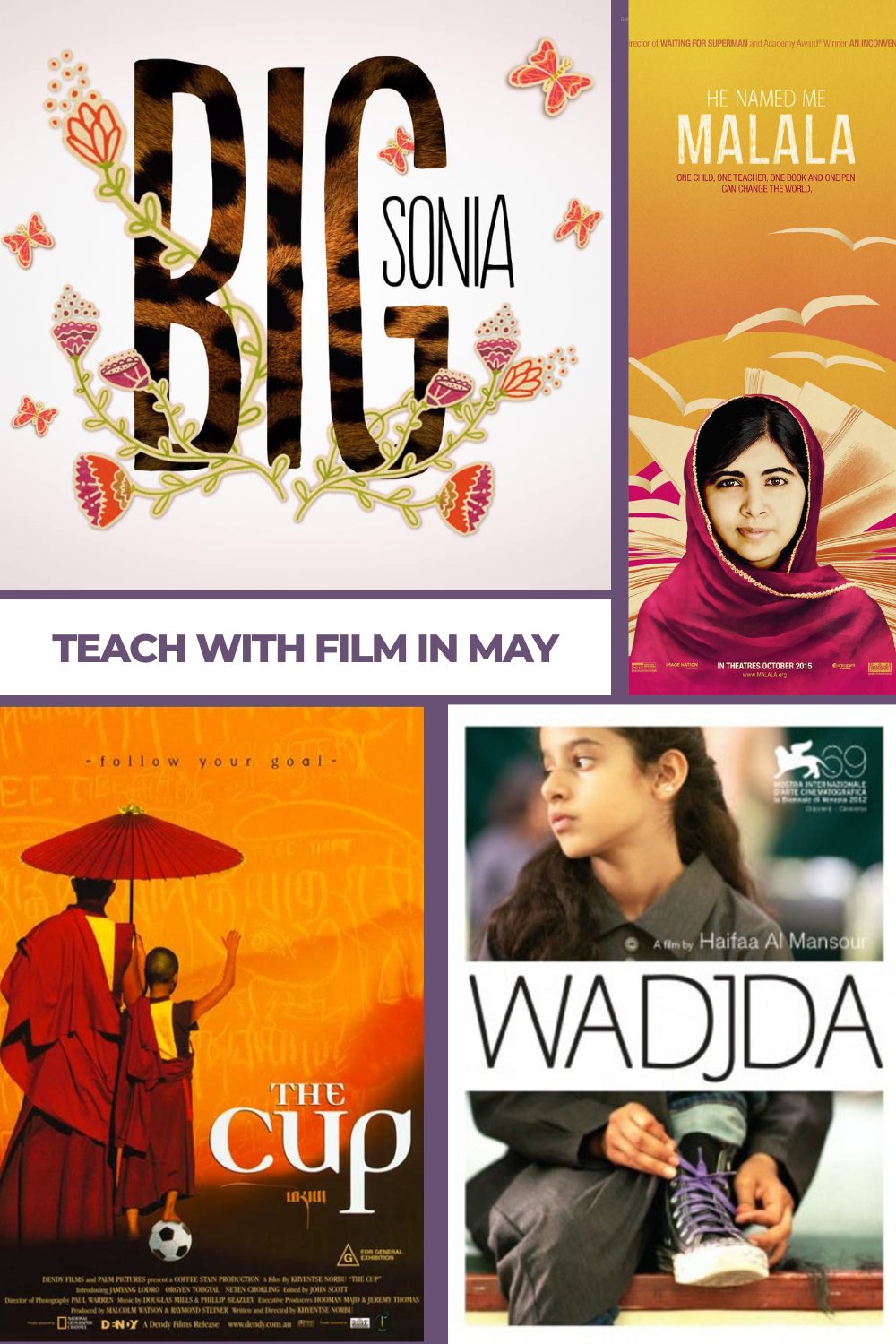
Representation matters: it’s a powerful tool for creating empathy and understanding. Diverse film representation can act as both windows and mirrors for students, providing an opportunity to see into new perspectives and experiences, while also providing mirrors that reflect back affirmation and an expanded sense of possibility. We’re pleased to offer free teaching resources for award-winning documentaries and feature films with young female protagonists who students of all genders can relate to. These positive representations of girls can help to break down stereotypes, foster critical thinking about gender roles, and expand students’ ideas about what it means to be a girl.
This BAFTA-winning documentary explores the events leading up to the Taliban’s attack on Pakistani schoolgirl Malala Yousafzai for speaking out on girls’ education, followed by the aftermath, including her speech to the United Nations. We offer a He Named Me Malala Curriculum Guide with a lesson about Women’s Education, Health, and Economic Development. We also offer a He Named Me Malala Discussion Guide that explores Global Status of Girls’ Secondary Education. For grades 7+.
Hit Disney film Queen of Katwe follows the rise of young chess prodigy Phiona Mutesi from a slum in Uganda to become an international chess star. Our Queen of Katwe Discussion Guide deepens the experience of viewing this inspiring true story. For grades 5+.
The Neighborhood Storyteller
In compelling documentary The Neighborhood Storyteller, a Syrian refugee mother in Jordan’s Zaatari camp empowers young girls through transformative reading circles, igniting hope and change. Asmaa Rashed’s read-aloud project uses literature as a catalyst to expand the teenage girl participants’ horizons, nurture self-worth, and inspire them to envision a future filled with opportunities. Our discussion guide deepens engagement with these refugee girls’ stories and includes a section on Girls and Education. This must-watch film inspires students of all genders about the power of finding their own voice and the potential to change the world they live in. For grades 9-12.
This heart-warming feature film follows a young Saudi girl despite cultural norms about girls’ roles in society desperately wants the freedom of a bicycle. Our Wadjda Curriculum Guide introduces social constructions of gender, and also Saudi Arabia’s historic first woman film director Haifaa Al Mansour (the director of Wadjda). For grades 11-12.
This acclaimed feature film from Aotearoa / New Zealand follows a young Māori girl who is determined to fulfill her destiny despite traditional gender barriers. (Wadjda and Whale Rider make a great global education double bill!) Our Whale Rider Curriculum Guide introduces explores culture and gender. For grades 6-8.
Related Resources
Teach with Film for Casual Pi Day July 22
Happy Casual Pi Day or Pi Approximation Day! The fraction 22/7 is an approximate value of Pi, so Casual Pi Day falls on July 22; the numerator 22 represents the date, while the numerator seven represents the month. It’s a great day to highlight our lessons for teaching math with film. Our free film teaching guides feature classroom-ready lesson plans across the curriculum suitable for grade 4 all the way to grade 12 — including math lessons!
Hidden Figures
Our most popular math lesson is part of our Hidden Figures Curriculum Guide, about The Math of Space Travel: Orbits and Conic Sections, for grades 9 to 12. You can download the full Hidden Figures guide from our library, or get this lesson on its own from Share My Lesson.
Children of Heaven
Children of Heaven features two math lessons: Lesson 8: Keeping Secrets and Lesson 9: Iran: The Land of Earthquakes.
Like Stars on Earth
Like Stars on Earth Lesson 4 explores the math of Determining Your Grade.
Please Vote for Me
Please Vote for Me Lesson 4 introduces students to Integer Calculations with Chinese Number Rods.
The Cup
The Cup Lesson 9 looks at the math of The Value of Money.
The Invisible Shield
Learn about the role of data & vital statistics in public health with The Invisible Shield! Discover how data can drive health interventions that save lives. Get students excited about a range of math-based public health careers.
The Way Home
The Way Home Lesson 9 teaches students about Using Graphs.
Whale Rider
Whale Rider Lesson 9 shows students how to Count the Uncountable with Fermi problems, using examples from the film.
Get your free math lesson plans from our library and liven up your math classes today!
Teach with Film for World Brain Day July 22
Teach about neurological disorders with film
World Brain Day on July 22 promotes awareness and education for neurological disorders. We’re pleased to offer engaging resources to help you explore neurological disorders through film with your learning communities.
This a heartwarming feature film tells the story of a dyslexic boy who thrives with the support of his art teacher. Our free film Curriculum Guide features a lesson exploring the structure and function of the brain. It also includes a fun science activity where students analyze their own brain function. This science lesson is for grades 6-8. Learn more about teaching with Like Stars on Earth.
This award-winning documentary tells the story of a rising star transformed by a traumatic brain injury (TBI) and follows her remarkable journey of rehabilitation and recovery. The TBI to the left hemisphere of Gabby Giffords’ brain triggered aphasia, which affects the ability to use language to communicate. Our free film Discussion Guide has a section exploring the science of aphasia as well as Gabby Giffords’ rehabilitation and recovery experiences. This film and guide are a great combination for high school settings as well as community groups, film clubs, and public screenings for World Brain Day! Learn more about teaching with Gabby Giffords Won’t Back Down.
Oscar-nominated documentary Crip Camp explores how a revolution blossomed at a ramshackle summer camp for teenagers with disabilities, transforming their lives and igniting a landmark movement. Our free Crip Camp curriculum guide includes a lesson on “Language Power and Ableism”; we recommend this lesson to help educators and learners discuss neurological disorders in a sensitive and appropriate way. Learn more about teaching with Crip Camp.
Celebrate Minority Mental Health Awareness Month with Film
July is Black, Indigenous, and People of Color Mental Health Awareness Month, also known as BIPOC Mental Health Awareness Month or Minority Mental Health Awareness Month. It’s a great time to celebrate minority mental health awareness with film. We’re highlighting educational resources that explore mental health and wellness, with a special focus on films that center BIPOC subjects, stories and points of view. These resources cover important social emotional learning topics and can be great assets to health classes.
Celebrate Mental Health and Wellness with BIPOC-Centered Films
The Cup
The Cup, a feature film about a young Tibetan Buddhist monk living as a refugee in India who develops a passion for the World Cup, includes a Visual Arts lesson on Mandala Art as Contemplative Practice. This is a great lesson for teaching practical mental health coping skills. Pair it with our handout on Mandalas from The Story of God Curriculum Guide.
The Dhamma Brothers
The Dhamma Brothers, about a meditation program in an Alabama prison, includes an experiential lesson, Introduction to Meditation, which pairs well with the mediation section in The Story of God. The Dhamma Brothers curriculum guide also features lessons on the mental and physical effects of meditation. Because of the racialized nature of the justice and carceral systems, many of the subjects in this film are men of color. This guide also includes a lesson that examines the roots of racialized sentencing in historical inequity and oppression.
Happy
Award-winning documentary Happy explores The Psychology of Happiness. Through cutting-edge science and remarkable human stories from Namibia, Brazil, Bhutan, Kolkata, Louisiana, and more, the film leads us to a deeper understanding of why and how we can pursue more fulfilling, healthier, and happier lives. The Happy Curriculum Guide is a great tool to bolster social emotional learning (SEL).
The Music of Strangers: Yo-Yo Ma and the Silk Road Ensemble
The Music of Strangers follows more than 50 artists from around the world as they explore the ways art can both preserve traditions and shape cultural evolution. Lesson 4 about The Ongoing Syrian Conflict and Humanitarian Crisis is a great way to teach about using art to respond to crisis. It includes a handout on Art as Self-Reflection. This lesson and handout pair well with Defiant Requiem.
The Neighborhood Storyteller
The Neighborhood Storyteller, about Syrian girls’ education activist Asmaa Rashed, includes “Work, Life Skills, and Visions for the Future,” which explores the intersection of identity, purpose, and happiness. It also features a film-book pairing with Muzoon: A Syrian Refugee Speaks Out by Muzoon Almellehan with Wendy Pearlman.
Youth v Gov
The Discussion Guide for Youth v Gov, about the diverse group of young people suing the US government for the right to a safe climate, includes a great section for launching discussions about Climate Anxiety and coping strategies, as well as empowering sections on Climate Justice and Climate Activism.
Additional Mental Health and Wellness Resources
Big Sonia
Big Sonia, about Holocaust survivor and Holocaust educator Sonia Warshawski, feaures a powerful lesson on PTSD and Intergenerational Trauma.
Defiant Requiem
Defiant Requiem, about how prisoners at Therienstadt (Terezin) concentration camp used art and music as tools of survival and resistance, features a lesson on Art and Resilience.
Gabby Giffords Won’t Back Down
Our Learning Guide for Gabby Giffords Won’t Back Down, about gunshot survivor turned gun violence activist Gabby Giffords, includes a section on the impact of gun violence on Mental Health which features prompts for personal reflection and for discussion, as well as extension activities.
Greener Pastures
Greener Pastures follows four midwestern farming families in an underdog story of perseverance and determination. The Greener Pastures Discussion Guide is a great springboard for discussing stress, mental health, and resilience.
Additional Resources
Learn more about mental wellness coping strategies with experiential lessons in our article for Religion Matters about Mindfulness, Meditation and Mandala Art.
When to Teach with These Materials
These films are great to teach with all year round. You may find them especially helpful for:
- Mental Wellness Month in January,
- World Teen Mental Wellness Day on March 2,
- Mental Health Awareness Month in May,
- Children’s Mental Health Awareness Week in May,
- PTSD Awareness Month in June,
- National PTSD Awareness Day on June 27,
- Black, Indigenous, and People of Color Mental Health Awareness Month in July,
- Mental Illness Awareness Week in October,
- World Mental Health Day on October 10.
Teach with Film in July
Whether you’re teaching summer school or summer camp or your school is still in session in July, we have suggestions for easy, classroom-ready lesson plans and discussion guides to help you teach with film. Plus great films for summer film programs and summer activities!
July Teaching Highlights
July is Disability Pride Month and July 26 is National Disability Independence Day. Celebrate Disability Rights and Disability Pride with Crip Camp.
July 8 is National Video Game Day. Discover the joy of learning with educational video games, with Walden, a game, from the USC Game Innovation Lab.
July 20 is World Chess Day. Celebrate the game of kings with hit Disney film Queen of Katwe.
July 28 is World Nature Conservation Day. Explore the wonder of creatures great and small with our Celebration of Nature Lesson Collection.
More July All-Month Events
July is Black, Indigenous, and People of Color Mental Health Awareness Month. Teach Mental Health Awareness with Film.
June is also National Parks & Recreation Month. It’s a great time to Learn about forests with film.
Special July Teaching Days
July 1 is National Zip Code Day. Teach with UNZIPPED, which tackles income inequality as experienced by three families living in the same zip code.
The Civil Rights Act was enacted on July 2, 1964. Check out our standalone lessons about civil rights and the civil rights movement in our Black History Lessons Collection.
July 4 marks the anniversary of the death of Polish physicist, Marie Curie, who conducted pioneering research on radioactivity, which substantially contributed to cancer treatment methods. Introduce students to more inspirational women of science with Hidden Figures, Jane, and The Love Bugs.
July 9 is the birthday of actor Tom Hanks! We’re pleased to offer guides for two of Hanks’ award-winning collaborations with Steven Spielberg: Bridge of Spies and The Post.
July 23 is International Self-Care Day. Check out our free experiential lessons on meditation and mindfulness — for your students or for yourself!
July 26 is National Disability Independence Day, a great day to watch Crip Camp.
Celebrate Families with Film
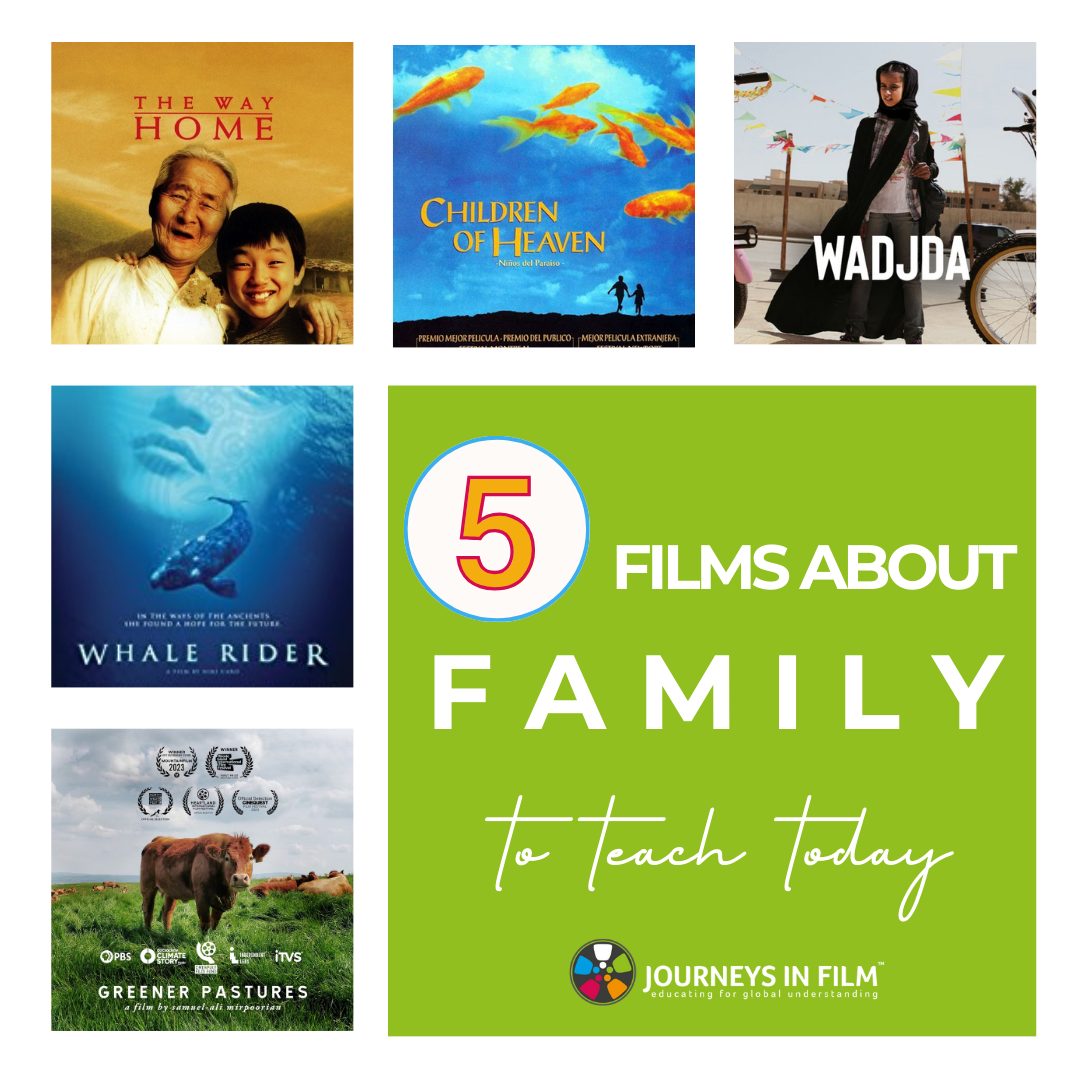
Films can be powerful classroom tools to explore the rich diversity of global families and family ties. We recommend coming of age dramas Children of Heaven, The Way Home, Wadjda, and Whale Rider. There is also a powerful section for discussing family traditions in our discussion guide for award-winning documentary Greener Pastures.
Children of Heaven, about a young brother and sister on a quest for new shoes, is rated PG-13 and recommended for ages 10+. Learn more about teaching with Children of Heaven.
The Way Home addresses intergenerational relationships and rural-urban cultural differences with the story of a boy who moves from the city to stay with his grandmother in the countryside. This film is rated PG. Learn more about teaching with The Way Home.
Wadjda tells the delightful story of a convention-defying Saudi girl whose heart is set on the impossible goal of getting a bicycle, from Saudi Arabia’s first woman director Haifaa Al Mansour. Wadjda is rated PG. Common Sense Media rates recommeds Wadjda for ages 9+. Learn more about teaching with Wadjda.
Whale Rider tells the story of a Māori girl who challenges traditional gender roles to fulfil her destiny. The film is rated PG-13. Common Sense Media rates this film as appropriate for ages 10+. Learn more about teaching with Whale Rider.
Greener Pastures follows four faming families in the Midwest, charting their struggles, failures and triumphs. This documentary film is unrated. We recommend it for grades 6+. Learn more about teaching with Greener Pastures.
These can be great films to start classroom discussions about families for:
New Cross-Media Professional Development Webinar
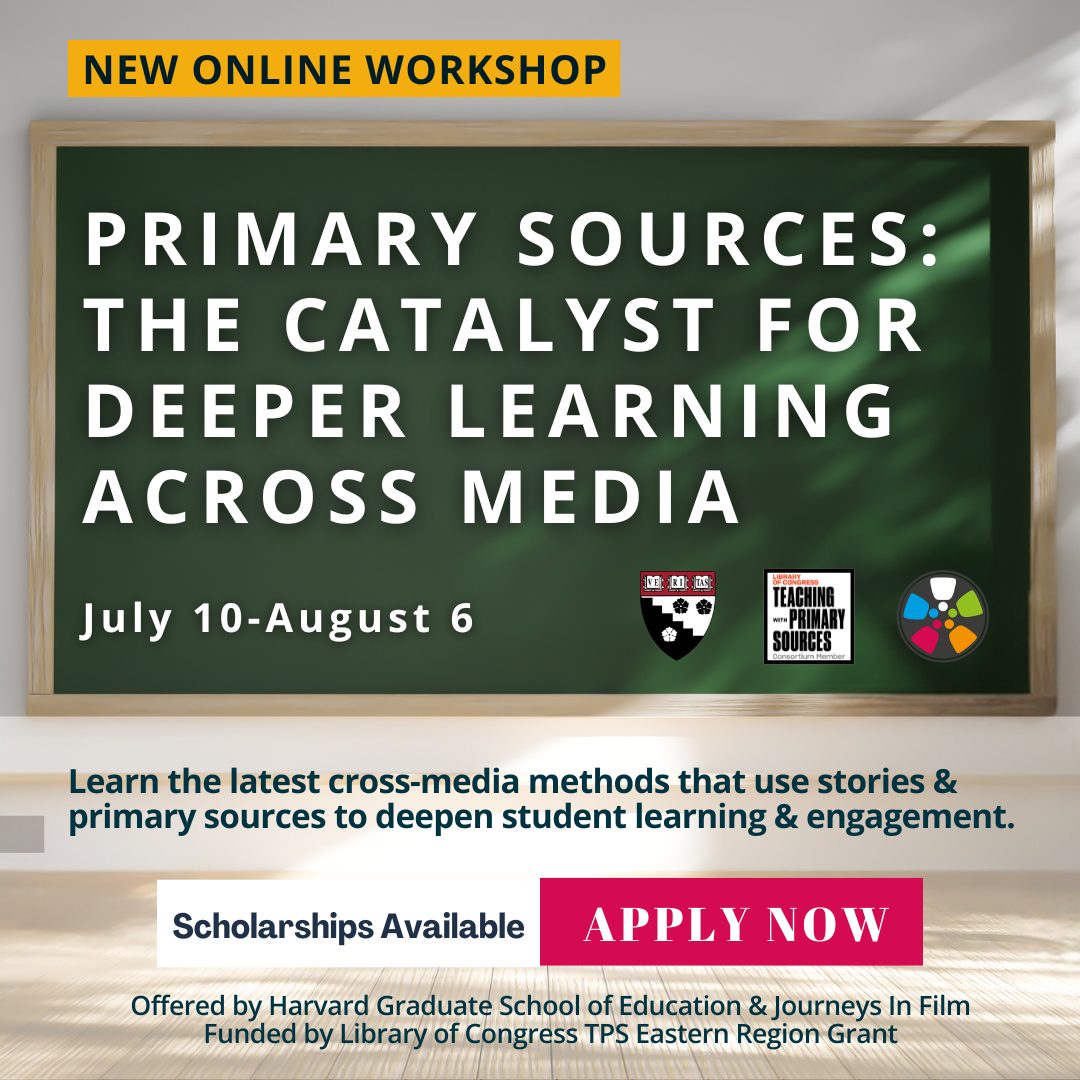
Primary Sources: Catalyst for Deeper Learning Across Media
July 10-August 6, 2024
We are pleased to announce we are part of an upcoming Cross-Media Professional Development Course in the summer of 2024 with the Harvard X-Media Lab. We hope you can join us for this exciting new online, asynchronous workshop for professional development credit. APPLY NOW.
What You’ll Learn
- The latest cross-media methods that integrate the strategic use and analysis of primary sources to deepen student learning and engagement.
- Techniques and best practices for choosing stories, analyzing primary sources, utilizing a proven complexity model for assessments, and adapting the cross-media methodology to different disciplines and grade levels.
- Learn more about the cross-media approach.
Who Should Attend
- Educators, librarians, and instructional coaches at all levels of experience.
- Education professionals interested in bringing primary sources into your classroom or library in dynamic ways that build digital/media literacy, cultivate new perspectives, and meet students where they are.
- Advocates for innovative instructional moves that can be shared with other educators to enhance teaching/learning at all levels.
What to Expect
An interactive learning experience focused on an expanded methodology that combines the power of storytelling with cross-media analytic methods, and the strategic use of primary sources.
Registration Details
Registration/Cost: Free. Participation will be covered by a scholarship. Enrollment is limited.
Application Deadline: Scholarships will be awarded on a first come/first serve basis. Please don’t wait to apply!
PD Credit: Available
Prerequisites: None.
How to Apply: Fill out the scholarship application form. Apply Now.
What to Teach in June
Whether you’re planning ahead for what to teach in June or you’re looking for last-minute June teaching ideas, we have suggestions for easy, classroom-ready lesson plans and discussion guides to help you teach with film.
June Teaching Highlights
June is Pride Month. Support LGBTQ students, colleagues and community members with Finding Pride.
June is Gun Violence Awareness Month & June 7 is Gun Violence Awareness Day. Start productive conversations in your classroom and community about gun violence with Gabby Giffords Won’t Back Down.
June 18 is International Day for Countering Hate Speech. We recommend our webinar about Anti-Bias Education: Using Media to Foster Critical Thinking and Combat Antisemitism and Islamophobia. The session provides an overview of anti-bias teaching tools and as well as strategies for dealing with difficult classroom situations around these topics. This webinar is available free and on-demand through Share My Lesson. Participants can quality for one hour of PD-credit. Learn more about our Anti-Bias Education Webinar.
More June All-Month Events
June is Aphasia Month. Gabby Giffords survived a gunshot to the left side of her brain, which left her with aphasia. Our Gabby Giffords Won’t Back Down Discussion Guide, available in English and Spanish, explores her experience of rehabilitation and recovery. Also check out this free lesson from PBS Newshour at Share My Lesson about How Gabby Giffords Used Music to Rewire Her Brain and Gabby Giffords’ Interview in Ability Magazine.
Black Music Appreciation Month is the perfect time to teach with Summer of Soul, a celebration of the 1969 Harlem Music Festival. This is a moving and joyful film that’s great for the end of the year.
June is National PTSD Awareness Month and June 27 is National PTSD Awareness Day. We warmly recommend Big Sonia about Holocaust Survivor turned Holocaust Educator Sonia Warshawski for teaching about PTSD to grades 7 and up.
June is World Refugee Awareness Month and June 20 is World Refugee Day. Check out our resources for Bringing Refugee Stories to Your Classroom for grades 4 to 12. Including a film/book pairing!
Teach about Public Health in June
Teach about the importance of public health, access to healthcare, and healthcare inequities with The Invisible Shield for Men’s Health Month and Men’s Health Week (June 10-16) plus World Aids Vaccine Day on May 18 and World Wellbeing Week (June 26-30). Inspire students about careers in public health!
Special Weeks in June
June 17-23 is Learning Disability Week 2023. Like Stars on Earth is a great choice for teaching about dyslexia. It’s a film filled with joy that students love.
Special June Teaching Days
June 3 is Love Conquers All Day: Teach about the love of nature and the nature of love with The Love Bugs.
June 5 World Environment Day: Get standalone environmental lessons in our new Environmental Studies Lessons collection.
June 6 is Russian Language Day. Teach about inspirational Russian political dissident and champion of democracy Alexei Navalny with Oscar-winning documentary NAVALNY.
June 7 is Gun Violence Awareness Day. Start productive conversations in your classroom and community about gun violence with Gabby Giffords Won’t Back Down.
June 8 is World Oceans Day. For students in grades 5-7, learn about whales with Whale Rider.
June 12 is Anne Frank’s Birthday. Complement your teaching of Anne Frank’s diary with our Holocaust Education Teaching Tools, including Schindler’s List, Big Sonia, Defiant Requiem and more.
June 17 is World Day to Combat Desertification and Drought. We recommend two engaging films about desertification causes and solutions: Climate Emergency: Feedback Loops and The Boy Who Harnessed The Wind.
June 20 is World Refugee Day Check out our resources for Bringing Refugee Stories to Your Classroom for grades 4 to 12. Including a film/book pairing!
June 20 is World Chimpanzee Day, a great day to teach about pioneering primateologist Jane Goodall with National Geographic’s documentary JANE. Learn more about teaching with this film with our article at Share My Lesson: Inspiring a Love of Nature and Learning: Celebrating Jane Goodall.
June 21 is World Music Day. Celebrate music, culture and global education with Chevalier, Defiant Requiem, Landfill Harmonic, Like Stars on Earth, Summer of Soul, and The Music of Strangers.
June 22 is Positive Media Day. Our Global Education Films collection features coming of age stories sure to inspire students of all ages. Check out The Boy Who Harnessed The Wind, The Cup, Wadjda and Whale Rider!
June 26 is International Day against Drug Abuse and Illicit Trafficking: Greener Pastures provides a thoughtful and sensitive look at hardship, addiction, mental health and resilience.
June 27 is National PTSD Awareness Day. We recommend our Mental Wellness Teaching Resources and in particular we recommend Big Sonia.
June 28 – July 3 marks the Stonewall Riots Anniversary. For a How It Started / How Its Going pairing, complement your Stonewall Riots lessons with Finding Pride from the It Gets Better Project.
June 28 is Matariki, the beginning of the new year in the Māori lunar calendar. Celebrate Māori culture with Whale Rider.
June 29 is International Day of the Tropics. Teach about the critical ecological importance of the Amazon Rainforest and what we can do to preserve it with River of Gold.
Holocaust Education: 7 Essential Teaching Tools
Holocaust education is, sadly, more urgent and timely than ever. We recommend the following film and teaching guide pairings to support you in mindfully teaching Holocaust education through film this month and all year round. These materials are variously appropriate for elementary school, middle school and high school; they can also work well for higher education, adult education, public screenings and community group settings.
Instructional Foundations
Our webinar about Anti-Bias Education: Using Media to Foster Critical Thinking and Combat Antisemitism and Islamophobia sets you up for success with Holocaust Education and Genocide education. The session provides an overview of anti-bias teaching tools and as well as strategies for dealing with difficult classroom situations around these topics. This webinar is available free and on-demand through Share My Lesson. Participants can quality for one hour of PD-credit. Learn more about our Anti-Bias Education Webinar.
We also offer Facilitation Guidelines to create safe discussion spaces and lead productive explorations of difficult topics. These guidelines pair well with our film guides for classroom use. The guidelines apply to a wide range of settings and are free for everyone.
First-Person Stories
To help your students understand the impact, consider using a film that focuses on an individual caught in the maelstrom of Nazism.
Big Sonia is about Holocaust survivor Sonia Warshawski, who was a Jewish teenager living in Poland when the German army invaded in the 1930s. She’s a woman who speaks to students and prison inmates about her story of unimaginable suffering — and she’s also a beacon of hope and resilience For grades 7 and up.
Defiant Requiem: The Film is about a unique chapter in Holocaust history when prisoners used music and the arts to sustain their spirits and resist oppression at Terezín concentration camp. This film can be difficult to find but it makes a powerful teaching tool when it is available. For grades 6 and up.
Schindler’s List includes our newly updated lesson about Antisemitism in the contemporary world. The Antisemitism Today lesson works as a standalone teaching resource and can also pair with other Holocaust and Genocide Education resources. You can download on its own from our Schindler’s List page and also from Share My Lesson. For grades nine and up.
Expand the Scope
Our guide for The Music of Strangers: Yo-Yo Ma & The Silk Road Project features an engaging lesson on cultural preservation that is relevant to Holocaust and Genocide discussions. For grades seven and up.
Our Navalny learning guide includes a powerful lesson on online propaganda that pairs well with our Antisemitism Today lesson (above) for bringing Genocide- and Holocaust Education into the present moment. For grades 9 and up.
We hope these resources can support you in honoring those whose lives were lost in the Holocaust, honoring survivors and their families, and committing to education and remembrance.
Teach Mental Health Awareness with Film
Films can be powerful tools for alleviating stress and also for teaching about stress awareness, resilience, emotional regulation and coping strategies! We recommend the following lessons in our film guides to help you teach about stress and mental wellness with film for grades 3-12. Mental Health Awareness Month in May and Children’s Mental Health Awareness Week May 5 – 12 are great times to teach with these films and they’re also great all year round.
For Grades 3-12
Award-winning documentary Happy explores The Psychology of Happiness. The Happy Curriculum Guide is a great tool to bolster social emotional learning (SEL).
For Grades 4-12
The Cup, a feature film about a young Tibetan Buddhist monk living as a refugee in India who develops a passion for the World Cup, includes a Visual Arts lesson on Mandala Art as Contemplative Practice. Pair it with our handout on Mandalas from The Story of God Curriculum Guide.
For Grades 5-12
The Neighborhood Storyteller, about girls’ education activist Asmaa Rashed, includes “Work, Life Skills, and Visions for the Future,” a section that explores the intersection of identity, purpose, and happiness.
For Grades 6-12
Defiant Requiem, about how prisoners at Therienstadt (Terezin) concentration camp used art and music as tools of survival and resistance, features a lesson on Art and Resilience.
Greener Pastures follows four midwestern farming families in an underdog story of perseverance and determination. The Greener Pastures Discussion Guide is a great springboard for discussing stress, mental health, and resilience.
For Grades 7-12 + Higher Education
Big Sonia, bout Holocaust survivor and Holocaust educator Sonia Warshawski, has a lesson on PTSD and Intergenerational Trauma.
The Dhamma Brothers, about a meditation program in an Alabama prison, includes an experiential lesson, Introduction to Meditation, which pairs well with the mediation section in The Story of God. The Dhamma Brother curriculum guide also features lessons on the mental and physical effects of meditation.
For Grades 8-12 + Higher Education
Our Learning Guide for Gabby Giffords Won’t Back Down, about gunshot survivor turned gun violence activist Gabby Giffords, includes a section on the impact of gun violence on Mental Health which features prompts for personal reflection and for discussion, as well as extension activities.
The Music of Strangers: Yo-Yo Ma and the Silk Road Ensemble follows more than 50 artists as they explore the ways art can both preserve traditions and shape cultural evolution. Lesson 4 about The Ongoing Syrian Conflict and Humanitarian Crisis is a great way to teach about using art to respond to crisis. It includes a handout on Art as Self-Reflection. This lesson and handout pair well with Defiant Requiem.
The Discussion Guide for Youth v Gov, about the young people suing the US government for the right to a safe climate, includes a great section for launching discussions about Climate Anxiety and coping strategies, as well as empowering sections on Climate Justice and Climate Activism.
What to Teach in May
Here are teaching ideas paired with free teaching resources for teachers and homeschoolers about what to teach with film in May!
May Teaching Highlights
Mental Health Awareness Month
May 5 – 12 is also Children’s Mental Health Awareness Week. We recommend these powerful lesson plans and experiential activities to support mental health and wellness all month long: Teach about Mental Health Awareness with Film for grades 4-12.
Holocaust Remembrance Day / Yom Hashoah May 6, 2024
May 8 is also Time of Remembrance and Reconciliation for Those Who Lost Their Lives During the Second World War. Educate your students about the Holocaust with our guides for Big Sonia, Defiant Requiem, and Schindler’s List; the cultural preservation lesson in The Music of Strangers; and our standalone lesson on Antisemitism Today (available from Share My Lesson and from our Schindler’s List page.) Learn more about our Holocaust Education resources.
May 22 is also Harvey Milk Day. These are great days to teach with Finding Pride from the It Gets Better Project.
More May Monthly Teaching Events
Better Hearing and Speech Month is a great time to teach about aphasia with Gabby Giffords Won’t Back Down and nonspeaking with The Way Home.
For Jewish Heritage Month, we recommend films about two of our favorite Jewish-Americans: Big Sonia, about Holocaust survivor / Holocaust educator Sonia Warshawski; and Genius (Season One), about Albert Einstein! We also have lessons to introduce students to Jewish belief and traditions in The Story of God.
Celebrate bikes for National Bike Month, National Ride a Bike Day on May 5 and National Walk Bike and Roll to School Day on May 8 with our films about the power of bicycles: The Boy Who Harnessed The Wind and Wadjda. Learn more: Films that Celebrate the Power of Bicycles.
May 5-11 is Be Kind to Animals Week! Celebrate animals with JANE, about Dr. Jane Goodall’s lifelong work with chimpanzees.
May 6-12 is National Nurses Week and May 12-18 is National Women’s Health Week. Teach about the importance of nurses in the public health system, and the invisible work of public health in promoting health and longevity with The Invisible Shield. It’s a great tool for getting students excited about public health careers.
May Special Teaching Days
May 3 is World Press Freedom Day. Teach powerful lessons about freedom of the press and media responsibility with our lesson plans for Gabby Giffords Won’t Back Down, Navalny and The Post. Get more resources in our article at Share My Lesson: Freedom of the Press in a Changing Media Landscape.
May 5 is Cinco de Mayo. Teach in Spanish with our Spanish-language teaching guides for Gabby Giffords Won’t Back Down, River of Gold, and The Love Bugs.
Looking for Portuguese-language teaching resources for Portuguese Language Day on May 5? Our River of Gold curriculum guide is also available in Portuguese!
May 12 is International Nurses Day! Celebrate nurses as the healthcare heroes they are with The Invisible Shield.
International Day of Families on May 15 is a wonderful day to teach with films that explore the rich diversity of global families and family ties. We recommend coming of age dramas Children of Heaven, The Way Home, Wadjda, and Whale Rider. There is also a powerful section for discussing family traditions in our Greener Pastures Discussion Guide.
Albert Einstein’s work at the beginning of the 20th century changed the way we think about time and light. For International Day of Light on May 16, introduce students to Einstein’s life and work with National Geographic’s Genius.
May 17 is the 70th anniversary of Brown v Board of Education, the landmarks U.S. Supreme Court decision in 1954 which ruled that U.S. state laws establishing racial segregation in public schools are unconstitutional. Teach about this milestone in Black History with our Hidden Figures lesson on Segregation and Civil Rights History. You may also find our collection of Black History Lessons helpful.
May 21 is World Day for Cultural Diversity for Dialogue and Development. The Music of Strangers: YoYo Ma and the Silk Road Ensemble is a great global education teaching tool to engage students about cultural diversity and cultural preservation. Unzipped also presents a great opportunity for discussing the power and importance of diverse communities.
May 21 is World Meditation Day. May 23 is also Vesak, the Buddhist celebration of the birth of Gautama Buddha, the founder of Buddhism. Introduce your students to Buddhism and meditation with The Cup, The Dhamma Brothers, and The Story of God.
May 22 is International Day for Biological Diversity. For high school students, teach about the biodiversity of the Amazon Rainforest with River of Gold. For elementary school students, explore nature with our Celebration of Nature collection for Grades 3-7.
May 26 is the Centennial of the enactment of the U.S. Immigration Act of 1924. Teach about immigrants and refugees with He Named Me Malala, The Neighborhood Storyteller, The Cup, and The Music of Strangers.