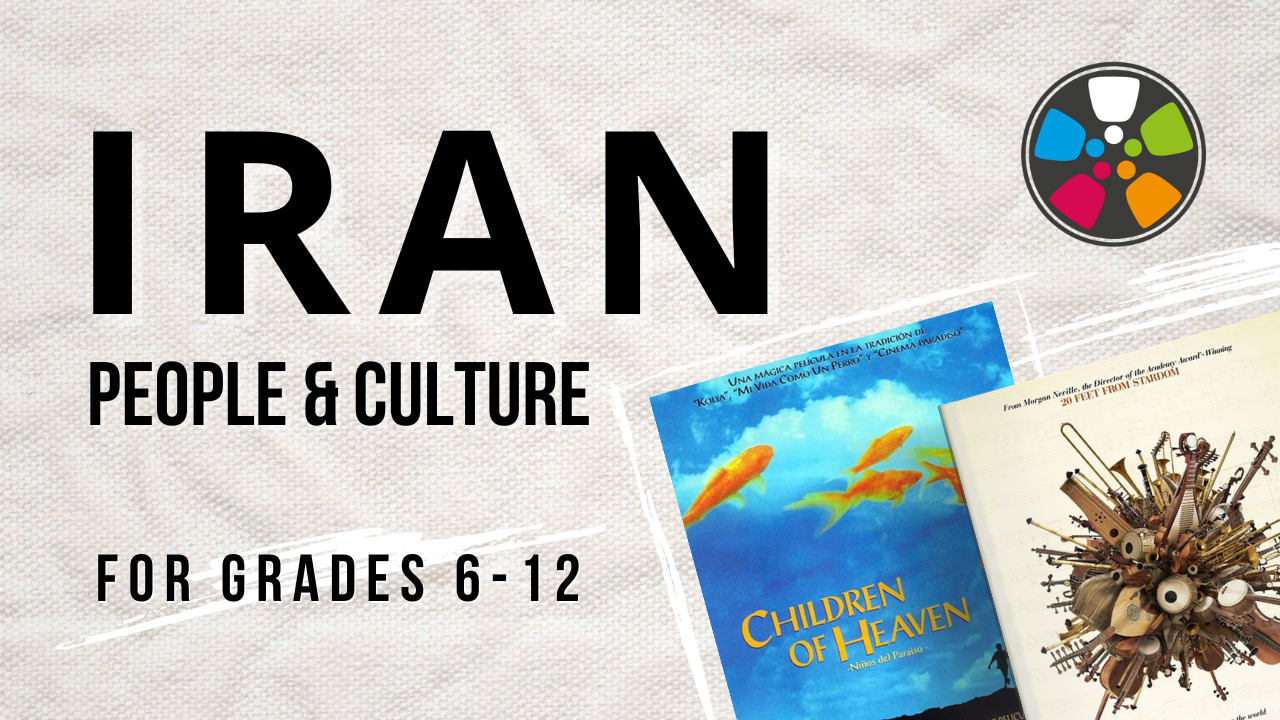
Film is a powerful way to teach about global peoples and cultures. As part of our global education collection, we are pleased to offer two Journeys in Film curriculum guides to help you teach about Iran with film, plus a curated collection of films by Iranian and Iranian-American filmmakers.
Teach about Iran with Film: Children of Heaven
Children of Heaven is a valuable resource for introducing students to The Islamic Republic of Iran. This contemporary Iranian film, shot in and around Tehran, follows two siblings who must work together to find a creative solution to deal with a missing pair of shoes. It’s a heartwarming film about families, compassion, moral responsibilities and issues of limited resources. Our Children of Heaven curriculum guide features a social studies lesson about the geography and culture of Iran for grades 6-9. The curriculum guide also features a country profile of Iran.
Learn more about teaching with Children of Heaven.
Teach about Iran with Film: The Music of Strangers: Yo-Yo Ma and the Silk Road Ensemble
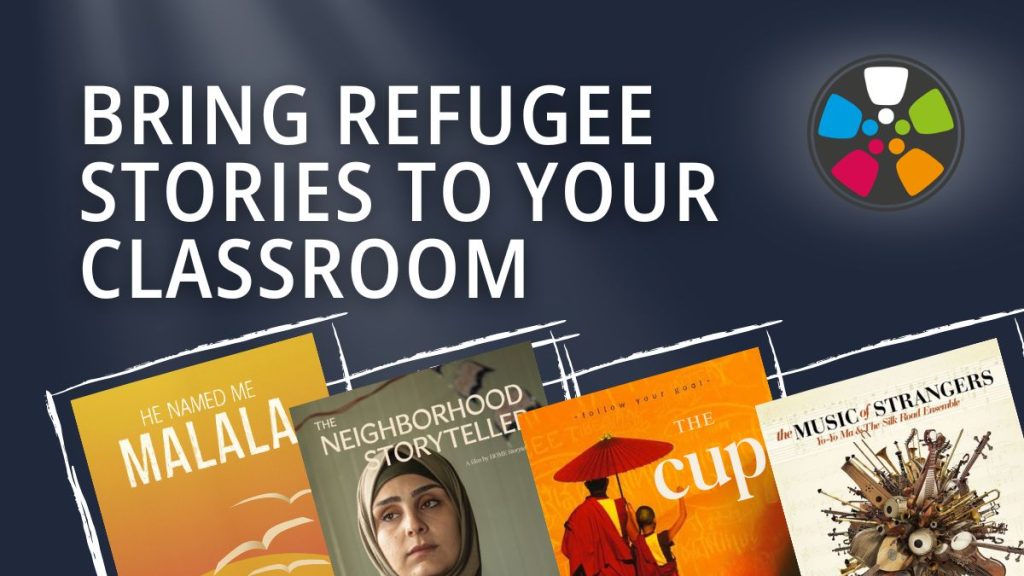
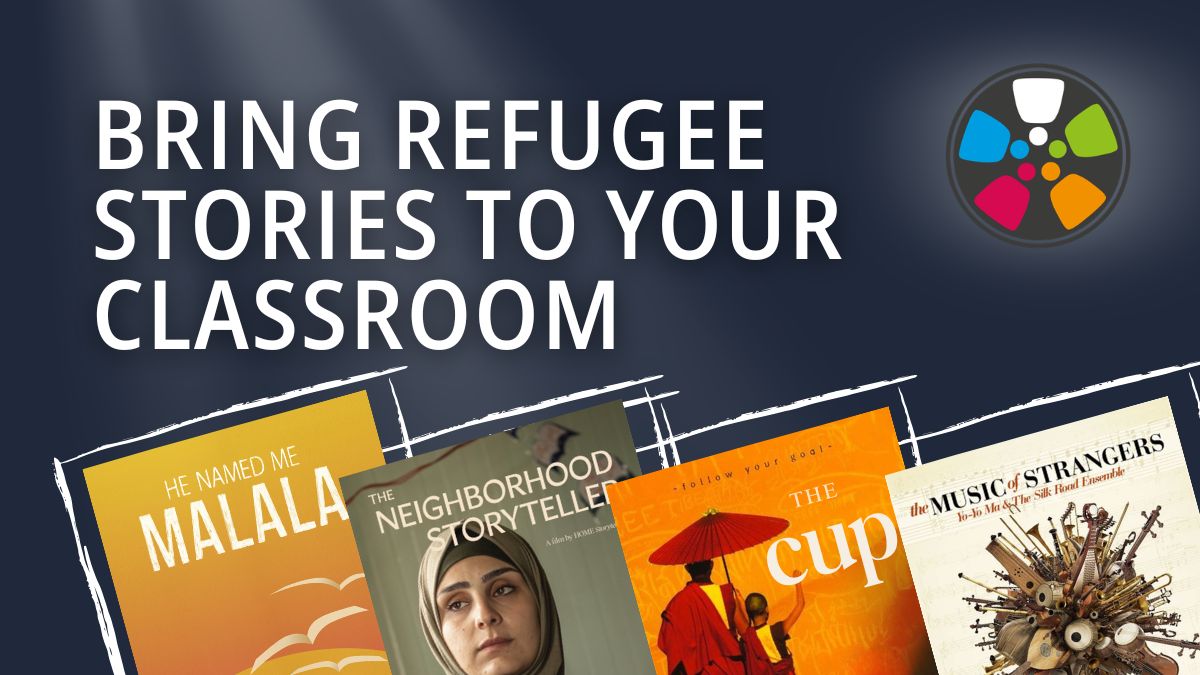
The Music of Strangers: Yo-Yo Ma and the Silk Road Ensemble is a powerful global education tool. This stunning documentary follows musicians, artists and storytellers from around the world as they explore the ways art can both preserve traditions and shape cultural evolution. The film includes an exploration of the life and work of Iranian musician Kayhan Kalhor. After the Iranian Revolution, Kalhor moved to Europe and Canada, and eventually immigrated to the United States. His work reflects both the folk melodies of Kurdish Iran and classical Iranian music. Our curriculum guide for The Music of Strangers features a lesson on the pivotal historic event of the Iranian Revolution, and its lasting effects on Iranian culture, for grades 7-12.
Learn more about teaching with The Music of Strangers.
Teach about Iran with Short Films: Gaze and The Young Old Crow
Recently, our Executive Director Jen Fischer curated a selection of short films for Culture Fix, including noteworthy short films from Iran. Culture Fix is a global collaborative network of cultural producers, creatives, activists, and entrepreneurs who use arts and culture to create social change.
Gaze is a fourteen minute short narrative film about an Iranian woman who witnesses an event on her way home from work and must decide what response to take. The film builds tension and offers opportunities to discuss difficult decisions and the reality of being an upstander versus and bystander. Gaze is available on Short of the Week and YouTube.
The Old Young Crow is a 12 minute short film about an Iranian boy who befriends an elderly Japanese woman in Tokyo. He reflects on that encounter through his old sketchbook in a combination of animation and live-action techniques. (Content note for educators: the film’s subject matter includes loss, suicide, death, and the afterlife, but no violence or death is shown.)
Spotlight on Iranian-American Filmmaker and Oscar-winner Rayka Zehtabchi
Shn(y)oof is an experimental short film co-directed by Iranian-American woman filmmaker Rayka Zehtabchi. We recommend watching Shn(y)oof and then reading the details about the film because the key to Shn(y)oof is behind the scenes. This film can inspire interesting learner discussions and activities around language and imagination. Learners could make up some of their own words or it may inspire bilingual and/or multilingual poetry writing. Shn(y)oof is available to watch from Short of the Week, which explains the filmmaker’s approach and goals for the film; it is also available but without the additional information on Vimeo.
Rayka Zehtabchi was the first Iranian woman to win an Oscar (for Period. End of Sentence). She was interviewed by Alyssa Shapiro for Youth to the People following her Oscar win. Check out the interview to learn more about this award-winning Iranian-American filmmaker.
Shn(y)oof is an excellent film for a Bell Ringer or “Watch and Write” opportunity. Here are our writing prompts for this fun short film.
- Create a list of 3-5 words (or more!) that could be part of your own made-up language. Give your language a name. Designate parts of speech for the words, if you can.
- Write a poem that marks a date that is special to you (like the anniversary in the film). In the poem, use words that others would recognize as well as some made up words that might be understandable through context. If you are bilingual (or trilingual or multilingual), use words from the various languages you know all together in one poem.
- This film is presented as a documentary, but is actually a scripted film (narrative/fiction) that is designated as experimental in the film world. Make a list of things in the film that felt “real.” Then make a list of things in the film that seemed perhaps “not real.” Reflect on why the filmmakers chose to make this film in this way, as if it were a documentary, when it was actually fiction.
- 3. Write your own logline for this film. (A logline is a short sentence or two that gives the audience an idea of what the film is about.)
You can find more short film recommendations with “Watch and Write” activities here.
Spotlight on Iranian-American Filmmaker Samuel-Ali Mirpoorian
Sam Mirpoorian is an Emmy® Award- and Television Academy Honors Award-winning filmmaker exploring societal themes at the intersection of time, isolation, health, science, and introspection. Sam was named a New Wave Filmmaker by Film Independent in 2025, a PBS Wyncote Fellow in 2023 and is a recipient of the Kodak Motion Picture Film Bronze Award for Excellence in Filmmaking. His work has been supported by Far Star Action Fund, Doc Society, Catapult Film Fund, Exposure Labs, ITVS, The Redford Center, and The Points North Institute. We are proud to offer teaching resources for two of Sam’s films.
Greener Pastures provides an intimate window into the lives of four multigenerational farming families as they navigate the stressors that have contributed to farming having one of the highest rates of suicide of any U.S. occupation. The Greener Pastures Discussion Guide for grades 6-12 and adult/higher ed is available in English and Spanish.
Sam’s short documentary film Safe Place chronicles the final hours of a a Southern Indiana man who endures a fatal night of torture while in custody after being arrested for a routine traffic stop. Content note for educators: this film contains difficult subject matter and is recommended for mature audiences. The Safe Place Discussion Guide is created for adult/higher ed use.
We hope that educators will find these resources helpful for putting Iranian culture, history and current events in context for your classroom discussions and presenting
Related Resources
Teach Anti-Bias Education with Film
Get Updates
Don’t miss out! Get notifications about launches of new Anti-Bias Education resources and other new reaching materials. Sign up for our newsletter.
Updated to add additional resources April 2026.