We’re pleased to introduce our collection of Acts of Reparation Teaching Resources, new at Journeys in Film!
In Acts of Reparation, two friends — one Black, one white — travel south to their ancestral lands to explore what reparations means to them. From kitchen tables to porches, lost cemeteries to discovered diaries, their journeys lead to unexpected opportunities that transform their friendship, families and communities. Together they reclaim and reckon with their roots and find that small acts can lead to big change.
Get these resources now from the Acts of Reparation page in the Journeys in Film Resource Library — or keep reading to learn more!
Acts of Reparation Teaching Resources FAQ
Why Use Acts of Reparation Teaching Resources In Your Classroom
Acts of Reparation is a powerful way to bridge the past and the present. It brings history to life through the experiences of individuals today seeking to look back at painful aspects of the U.S. History and repair — together.
These resources also provide opportunities for learning around primary sources and the archive as well as engagement with the topics of allyship and action. We feature community service learning elements as well as activities around historical inquiry.
Tell Me More About These Resources
We created both a Learning Guide with multiple sections and a Lesson Plan for Acts of Reparation. In both, we focused on handouts, worksheets and printables to encourage in-class pen and paper engagement for students. The lesson plan is Project-Based and aligns with key common core standards listed in the lesson plan.
Handout examples include:
- Empathy Map
- Researching Narratives Handout
- Listening Skills Handout
- Primary Source Detective Handout
- Historical Inquiry Handout
- Project Planners
- Reflection Journal Handout
What Ages Are These Resources For
Acts of Reparation is not rated. We recommend it for ages 14 and up. The Learning Guide is appropriate for classroom use as well as community learning and is easily adaptable for collegiate and adult learning opportunities. The Lesson Plan is appropriate for Grades 9-12.
Who Should Teach with Acts of Reparation Teaching Resources
The Acts of Reparation Teaching Resources are suitable for classes in: Civics, Community Service Learning, History, Social Studies, and US History.
Where Can I Watch This Film
Get the latest information on where to watch from the Acts of Reparation listing in the Journeys in Film Resource Library.
Where Can I Get the Acts of Reparation Teaching Resources
Get your free copy of these teaching resources from the Acts of Reparation page in the Journeys in Film Resource Library and learn more about teaching with this powerful and inspiring series.
Where Can I Get More Related Resources
Our Windows and Mirrors Media Literacy Activity gives students a way to consider if the perspectives of underrepresented and marginalized people are included in their media diets.
You can also check out our related resource collections for teaching with film about: Black History
How Can I Do Professional Development Related to this Series
Acts of Reparation filmmakers Selina Lewis Davidson and Macky share their experience with archival research and working with the Library of Congress and other archival tools in a live presentation for the Uncovering and Amplifying Untold Stories webinar. Learn more and register for the series: Stories That Connect: Using Film and Primary Sources to Build Belonging
What if I’m New to Teaching With Film
Check out our Teacher Toolbox to make teaching with film fun, easy and effective.
How Can I Share Feedback
If you are teaching with this film, we would love to hear how it works for you and your students. Please get in touch with us by using our contact form.
How Can I Get Updates About New Resources
Don’t miss out! Get notifications about launches of new teaching tools and professional development opportunities. Sign up for our newsletter.
Cultural Products as Historical Narrative is the second of three sessions in the Stories That Connect: Using Film and Primary Sources to Build Belonging professional development webinar series. View all sessions.
A recording of this webinar will be available soon.
Subjects: Art, Art History, English Language Arts, History, Music, Social Studies
Great For: Professional Learning, Teaching with Primary Sources, Oral History
Themes/Focus Areas: Active Listening Handouts, Civil Rights, Fashion as History, Music as History, Protest Art and Songs, Transcontinental Railroad, U.S. History, World War II
Grade Level: Grades 4-12, Professional Development
This webinar series is funded by a grant from the Library of Congress Teaching with Primary Sources program. Content created and featured in partnership with the TPS program does not indicate an endorsement by the Library of Congress.
About This Webinar
This webinar focused on the power and importance of Cultural Products and what they offer to compliment historical narratives and primary source learning with emphasis on:
- My Music with Rhiannon Giddens, which brings US history alive to explore the development of the Transcontinental Railroad during western expansion in the United States.
- The Bomber Boys: Flight Jacket Art, forthcoming materials that use this beautiful photographic history book highlighting various individuals served in World War II. This resource brings to life bomber jackets, oral history, and letters as important cultural products for historical learning.
- Film as a tool for building belonging in the classroom.
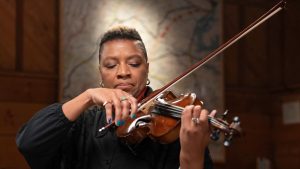
Mazz Swift and the Silkroad Project
We are pleased to announce that violinist Mazz Swift will be joining this free teacher webinar. She will also discuss her work as a creative artist engaging with historical songs.
Mazz Swift was featured in Episode Three of My Music with Rhiannon Giddens Season Two. Our learning materials for this episode focus on:
- Neurodiversity and Learning Styles
- Creative and Artistic Community
- Creative and Artistic Growth
- Improvisation in Music
- History of the American Transcontinental Railroad and Black Americans
- History through Music
- Music Lessons
Learn more about Mazz Swift in this Silkroad Ensemble artist profile: Spotlight: Mazz Swift.
This learning guide contains background context about the Transcontinental Railroad, a Pre-viewing Activity, and Active Viewing Recommendations.
Additionally, it also includes glossaries / lists of useful terms, discussion questions, related resources, and extended learning activates. The extended learning activities can include our supplementary Music Listening Handout and Song Analysis Handout.
Episode running time: 25 minutes
Subjects: History, Music, Music History, Social Studies, U.S. History
Lesson Grades: 6, 7, 8, 9, 10, 11, 12
——————————————————————————————————–
The American Railroad Instructional Guide brings accurate historical information regarding the development of the Transcontinental Railroad. The guide address the impact of the railroad’s progress on individuals and groups vital to the success of this national endeavor. The lessons also present realistic experiences, many of which have been overlooked and misrepresented.
The American Railroad Unit is standard-based, with an emphasis on ELA and Social Science for middle school students. The Enduring Understanding – Students understand that progress has varying impacts on the people and cultures it touches – is the foundation that unifies each lesson. Each lesson, then, is designed to be integral to the unit outcome and relies upon the previous lesson(s), ensuring clarity of the day’s learning and the instructional journey.
Each lesson relies on key reading, critical thinking, processing, collaboration, communication, creativity, and reflection. Every lesson contains a student handout and a teacher key.
The American Railroad Student Guide features printable student handouts for all 11 lessons. Each lesson includes a Share Out, a Daily Learning Target, a detailed Reading Process, and Discussion Questions. They also include related primary sources, terms to know, worksheets and activities.
About The Bomber Boys: Flight Jacket Art
Our forthcoming teaching materials for this beautiful book offer a new way to engage students as they learn about World War II. Materials emphasize the A-2 Jacket as a Historical Document, handouts regarding material culture, object analysis as well as learning materials regarding folk art, symbology, oral history and more.
We will preview these materials in the webinar. Don’t miss out when they become available. Sign up for our newsletter!
Key Related Materials
Rebel Hearts
Rebel Hearts tells the remarkable story of the Sisters of the Immaculate Heart of Mary. In 1960s Los Angeles, they bravely stood up to the patriarchy of the Catholic Church, fighting for equality, their livelihoods, and their own freedom against an all-powerful Cardinal who sought to keep them in their place.
Our Curriculum Guide for this film features three lesson plans:
- Lesson One: The Context of Change
- Lesson Two: Change Comes to the Immaculate Heart of Mary Sisters
- Lesson Three: The Power of Corita Kent’s (Sister Mary Corita’s) Calligraphic Art
In the webinar, we will focus on Corita Kent’s art to inspire learners.
Summer of Soul
In Summer of Soul (…Or, When the Revolution Could Not Be Televised), Ahmir “Questlove” Thompson presents a powerful and transporting documentary — part music film, part historical record created around an epic event that celebrated Black history, culture and fashion. Over the course of 6 weeks in the summer of 1969, just 100 miles south of Woodstock, The Harlem Cultural Festival was filmed in Mount Morris Park (now Marcus Garvey Park). The footage was largely forgotten–until now. Summer of Soul shines a light on the importance of history to our spiritual well-being.
Our Curriculum Guide for this film features six lessons, including our very popular lesson that allows students to create their own music festival!
This film is a strong example of music as a powerful primary source.